You notice a symptom that should probably be checked, but the timing is awful. Work is busy, the kids need picking up, and sitting in a waiting room for a routine form feels like the hardest part of the whole process. That is exactly why more Australians look for a pathology request online – not to replace proper medical care, but to make basic access to it much easier.
For many everyday health concerns, a pathology request does not need to begin with a trip across town. If your situation is appropriate for telehealth, an Australian-registered GP may be able to assess your symptoms by phone or video and issue the pathology form you need. That can mean less delay, more privacy, and a faster path to answers.
What is a pathology request online?
A pathology request online is a pathology referral issued after a telehealth consultation rather than an in-person clinic visit. The referral allows you to attend a pathology collection centre for testing, depending on what the doctor decides is clinically appropriate.
The important part is that the request still starts with a GP assessment. It is not an automatic form and it should not be treated like one. A doctor needs to understand what is going on, ask relevant questions, review your history, and decide whether testing is warranted.
That matters because pathology is useful when it is targeted. The right test can help confirm a diagnosis, rule out common causes, or guide treatment. The wrong test can create confusion, extra follow-up, or false reassurance.
When an online pathology request may be suitable
A pathology request online can be a practical option for a range of non-emergency concerns. If you have symptoms that need investigation, ongoing monitoring for an existing issue, or a straightforward follow-up question, telehealth may save time without lowering the standard of care.
Common examples include possible urinary tract infections, fatigue, low iron concerns, thyroid symptoms, sexual health screening, repeat monitoring for an established condition, or checking general markers where a GP thinks tests are reasonable. It can also help when you already know you need to speak to a doctor but do not need a physical examination straight away.
That said, suitability depends on context. A simple symptom in one person may be more serious in another because of age, medical history, pregnancy, medication use, or how long it has been going on. A good telehealth service will not force every issue into an online pathway. If you need a hands-on examination or urgent face-to-face care, that should be made clear.
When online may not be the right option
Some symptoms need in-person assessment first. Chest pain, breathing difficulty, severe abdominal pain, neurological symptoms, heavy bleeding, or anything rapidly worsening should not wait on routine telehealth.
There are also cases where an online GP may need to be cautious even if the issue seems routine. A skin change that needs close visual inspection, abdominal tenderness that should be examined, or complex symptoms with many possible causes may be better managed in person. Telehealth works best when it is used for the right problems, not every problem.
This is where trust matters. If a doctor cannot safely help online, the safest answer is to say so.
How a pathology request online usually works
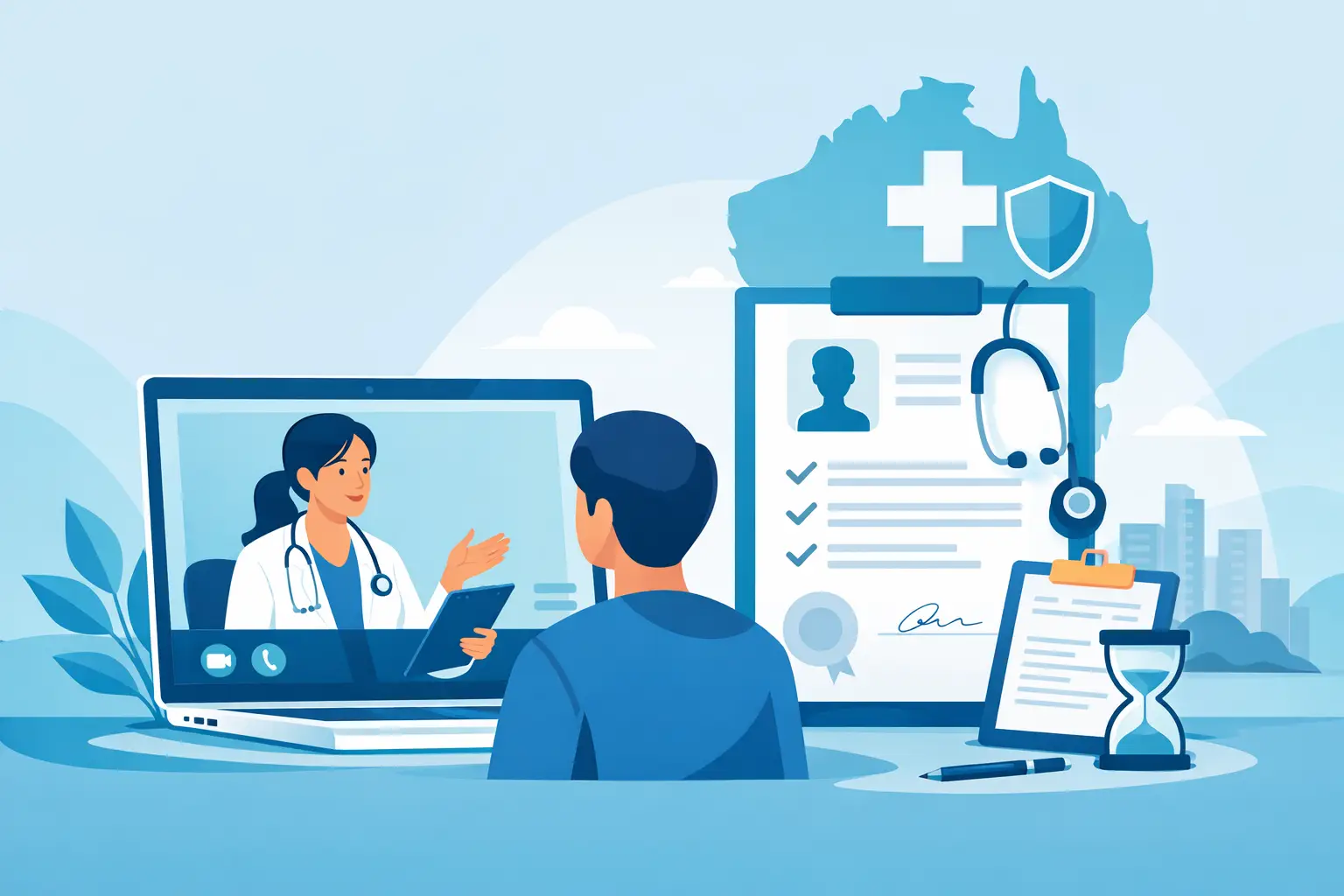
The process is designed to be simple, but it still follows normal clinical standards. You book a consultation, choose a phone or video appointment, and speak with an Australian-registered GP about your symptoms or reason for testing.
During the consult, the doctor will ask focused questions. They may ask when symptoms started, whether anything makes them worse, whether you have had similar issues before, what medicines you take, and whether there are any red flags that change the level of urgency.
If pathology is appropriate, the GP can issue a referral for the relevant tests. In a convenience-focused telehealth model such as TeleDoc, patients are looking for exactly this kind of straightforward workflow – book quickly, speak to a legitimate GP, and receive the required paperwork without extra steps or app downloads.
Once you have the request, you attend a pathology collection centre to have the sample taken. Depending on the test, that may involve blood, urine, swabs, or another type of specimen. The pathology provider then processes the sample and reports the results back to the requesting doctor.
In some cases, follow-up is just as important as the original request. Results might confirm a simple issue, show that nothing significant is wrong, or point to a need for treatment, repeat testing, or further assessment. A pathology request is not the end of care. It is one step in the process.
Why people choose this option
For most patients, the appeal is not complicated. It saves time.
If you are juggling work, family, study, or travel, getting a pathology request online can remove the biggest source of friction – attending a clinic just to start the process. Instead of rearranging your day around a short GP visit, you can organise care from home, the office, or wherever you have privacy and a decent signal.
Privacy is another reason people choose online care. Some concerns feel awkward to discuss in a crowded waiting room, especially sexual health symptoms, urinary issues, or questions around fatigue and hormone changes. A phone or video consultation can feel more discreet while still giving you access to proper medical advice.
It can also be especially helpful for people in regional areas, parents with limited flexibility, or anyone who simply wants routine healthcare to fit around real life. Convenience does not make the care less legitimate. The standard still comes from the doctor, the consultation, and whether the clinical decision is appropriate.
What a GP considers before ordering tests
Many patients assume testing is always useful, but good medicine is more selective than that. Before issuing a pathology request online, a GP should think about whether the result is likely to change management.
For example, if a symptom strongly suggests a self-limiting viral illness, pathology may not add much. If fatigue has been ongoing, or urinary symptoms suggest infection, or there are reasons to check iron levels, thyroid function, glucose, or sexual health screening, testing may be much more relevant.
Doctors also weigh timing. Some tests are more accurate after a certain number of days. Others may need fasting or special preparation. In some situations, the best next step is treatment first, with testing only if symptoms persist. In others, testing should happen before treatment begins.
This is why a quick online process still needs clinical judgement. Fast access is useful. Fast access without proper assessment is not.
What to have ready for your consultation
A little preparation can make the appointment more efficient. It helps to know your symptoms, when they started, whether they are getting worse, and what treatment you have already tried. If you have relevant past results, diagnoses, or regular medications, keep those details nearby.
It is also worth thinking about your goal before the consult. Are you trying to investigate a new symptom, monitor an existing issue, or follow up a previous recommendation? Clear context helps the doctor decide whether a pathology request online is appropriate and which tests, if any, make sense.
If the doctor advises against testing, that does not mean your concern is being dismissed. It may mean another pathway is safer or more useful.
After the test request is issued
Once your referral is sent through, the next step is attending a collection centre. Different tests have different turnaround times, so results may not all come back at once. Some are processed quickly. Others take longer, especially if they require more specialised analysis.
What matters next is follow-up. If your symptoms change while waiting, or if you become more unwell, you may need more urgent review rather than simply waiting for results. If the results are normal but symptoms continue, that can still be clinically important. Normal pathology does not always mean there is no problem – it just means the answer may lie elsewhere.
That is one of the real strengths of a GP-led telehealth service. The request is part of a broader decision, not just paperwork sent out on demand.
Getting a pathology request online makes routine healthcare easier when the issue is suitable for telehealth and the assessment is done properly. For busy Australians, that can mean fewer delays and a faster route to useful answers. If you need medical advice, the best next step is usually the simplest one – speak with a qualified GP, explain what is happening, and let the clinical decision guide the rest.