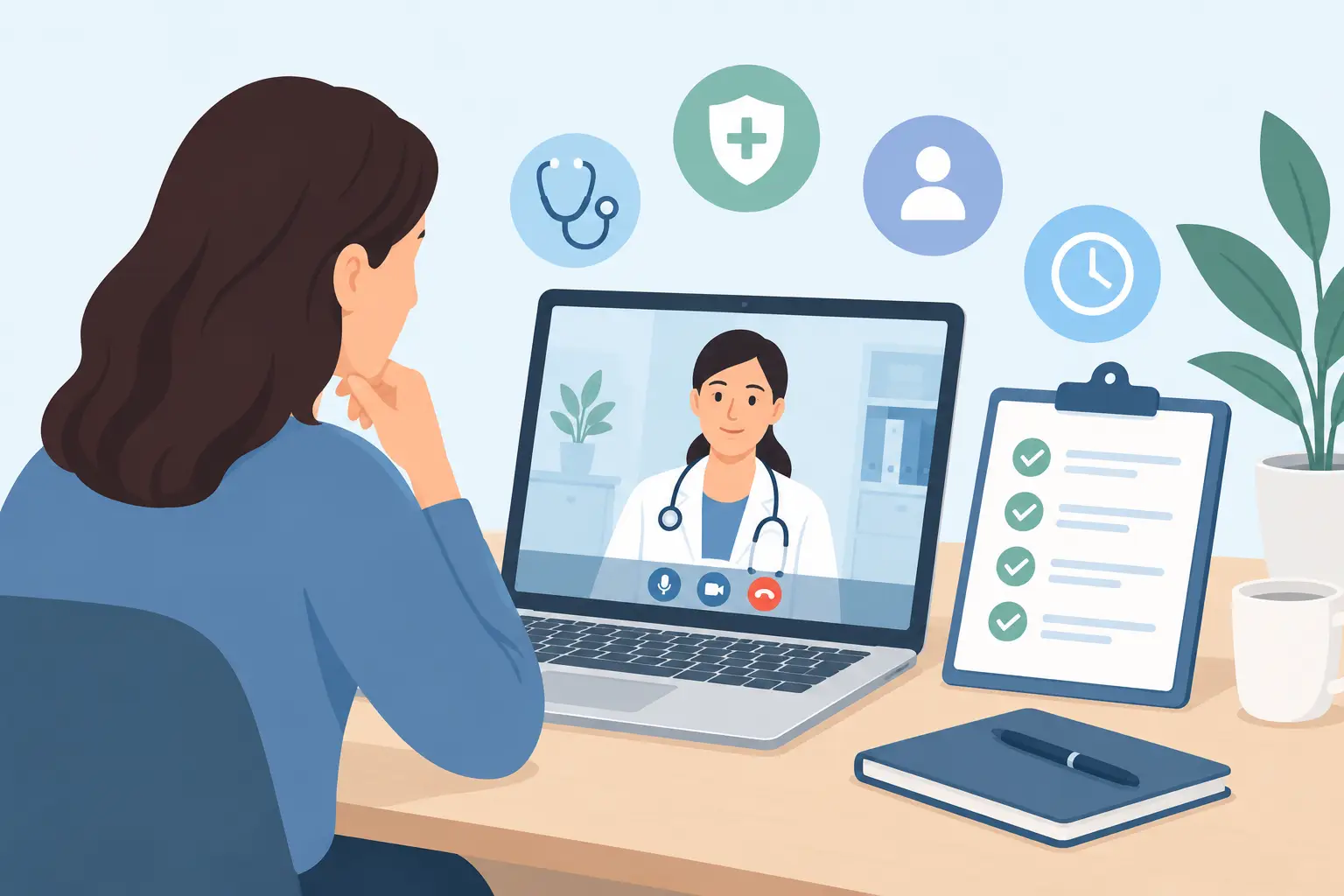
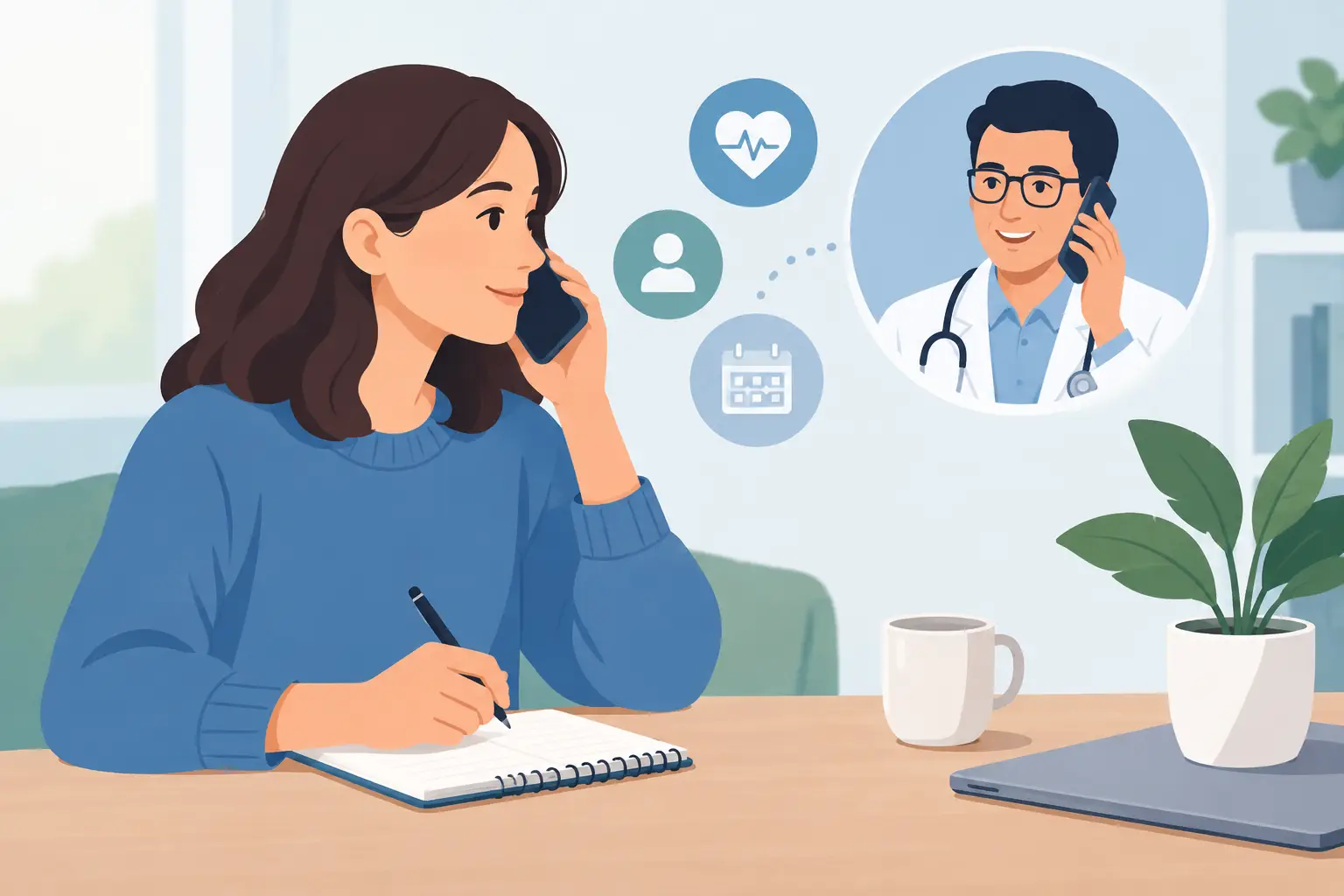
A sore throat before a work trip, a repeat prescription that has run out, or a child home from school with a rash can turn a normal day into a scramble for an appointment. Knowing how to access GP online gives you another practical way to get medical advice without travelling to a clinic or sitting in a waiting room.
For many everyday health needs, an online GP consultation can be arranged from your mobile, tablet or computer. You speak with an Australian-registered GP by phone or video, explain what is happening, and receive appropriate advice and documentation after the consultation where clinically suitable. It is healthcare on your phone, not in a waiting room.
How to access GP online in Australia
The process is usually straightforward. Start by choosing a telehealth provider that clearly states its doctors are Australian-registered and explains its fees and privacy practices. You should be able to see whether appointments are available on the same day and whether you need to download an app or create a lengthy account before booking.
Once you have selected an appointment time, complete a short booking form with your contact details, basic medical information and the reason for your consultation. Be accurate and specific. If you need a repeat script, for example, include the medicine name, strength and how long you have been taking it. If you need a medical certificate, provide the dates you have been unwell or unable to work or study.
You will then receive instructions for joining the consultation. Depending on the service and your needs, this may be a phone call or a secure video consultation. Choose a quiet, private place with reliable reception or internet access. Have your mobile nearby, as prescriptions and other documents may be sent by SMS or email after the GP has assessed you.
At TeleDoc, patients can book online and speak with a fully licensed Australian GP without an app download. If the doctor is unable to assist with your concern, you receive a full refund.
What an online GP can help with
Online care is designed for many common, non-emergency health concerns. It can be particularly useful when you need timely advice but do not require a physical examination straight away.
A GP may be able to assess symptoms such as colds and flu, sinus pain, uncomplicated urinary tract infection symptoms, skin concerns, allergies, asthma management, gastro symptoms and headaches. Telehealth appointments can also suit discussions about men’s health, women’s health, contraception, weight management, mental wellbeing and medication questions.
The consultation can lead to practical next steps. Where clinically appropriate, the GP may issue an electronic prescription, a medical certificate, a pathology request or a specialist referral. An e-script is commonly sent as a token by SMS or email, which you can take to a pharmacy to have the medication dispensed.
Repeat prescriptions are another common reason to see a GP online. However, a repeat is never automatic. The doctor needs to determine whether it remains safe and appropriate based on your medical history, the medication involved and how your condition is being managed. Some medicines require a face-to-face assessment or more regular monitoring.
Prepare for your consultation before it begins
A little preparation helps the GP make a safe decision quickly. Write down when your symptoms started, whether they are getting better or worse, and what you have tried already. Note any relevant medical conditions, allergies and current medicines, including vitamins and supplements.
If your concern is visible, such as a rash, swelling or an eye issue, good lighting can make a video consultation more useful. You may be asked to show the affected area on camera. For children, have their age, weight, temperature and symptoms ready. If you have recent test results or hospital discharge information, keep those details nearby as well.
Be direct about what you need, but remain open to the GP’s clinical advice. You might book hoping for a prescription, while the safest recommendation may be rest and monitoring, a test, an in-person examination or urgent care. A quality telehealth service does not treat a consultation as a document request. The doctor must assess your situation first.
When online GP care may not be the right choice
Telehealth is convenient, but it has limits. A GP cannot listen to your chest, check your blood pressure, examine an injury or perform a test through a screen. Sometimes your symptoms, medical history or the uncertainty around a diagnosis mean an in-person appointment is the better option.
Seek urgent help rather than booking a routine online consultation if you have severe chest pain, difficulty breathing, signs of stroke, heavy bleeding, a serious allergic reaction, a seizure, loss of consciousness, thoughts of self-harm, or symptoms that feel immediately life-threatening. Call Triple Zero (000) in an emergency.
You should also arrange prompt in-person care for severe or rapidly worsening pain, significant dehydration, a high fever with concerning symptoms, a major injury, or a condition that needs a physical examination. If you are unsure, explain your symptoms when booking or during the consultation. The GP can guide you on the most appropriate next step.
Privacy, safety and realistic expectations
A legitimate online GP service should make privacy a core part of the experience. Your health information needs to be collected and handled securely, and your consultation should take place through a private phone or video connection. On your side, avoid discussing sensitive details in a public place, and use headphones if others are nearby.
It also helps to understand that telehealth is still a medical appointment. Australian-registered GPs follow professional standards whether they see you online or in a clinic. They may ask detailed questions, decline a request that is not clinically appropriate, or recommend an in-person review. This protects you and supports safe care.
The speed of online access is valuable, especially for busy parents, shift workers, students and people living outside major centres. Yet convenience should not mean rushing important information. Tell the doctor about pregnancy, chronic conditions, previous reactions to medicines and any new or worrying symptoms, even if they seem unrelated to your main reason for booking.
Getting the most from an online appointment
Keep the consultation focused by starting with your main concern, then explain the timeline and impact on your daily life. For example: “I have had sinus pressure and a blocked nose for eight days, it is getting worse, and pain relief has not helped.” That gives the GP a clearer clinical picture than simply saying you have a sinus infection.
Before the appointment ends, make sure you understand the plan. Ask how to use any prescribed medicine, what side effects to watch for, whether you need tests or follow-up, and when to seek urgent care. Confirm how any certificate, referral, pathology request or e-script will be delivered.
Online GP care works best when it saves time without cutting corners. For a routine health concern, the right consultation can give you professional advice, a clear plan and the documents you need to get on with your day. If your symptoms change or you feel worse, trust that signal and seek further medical care.