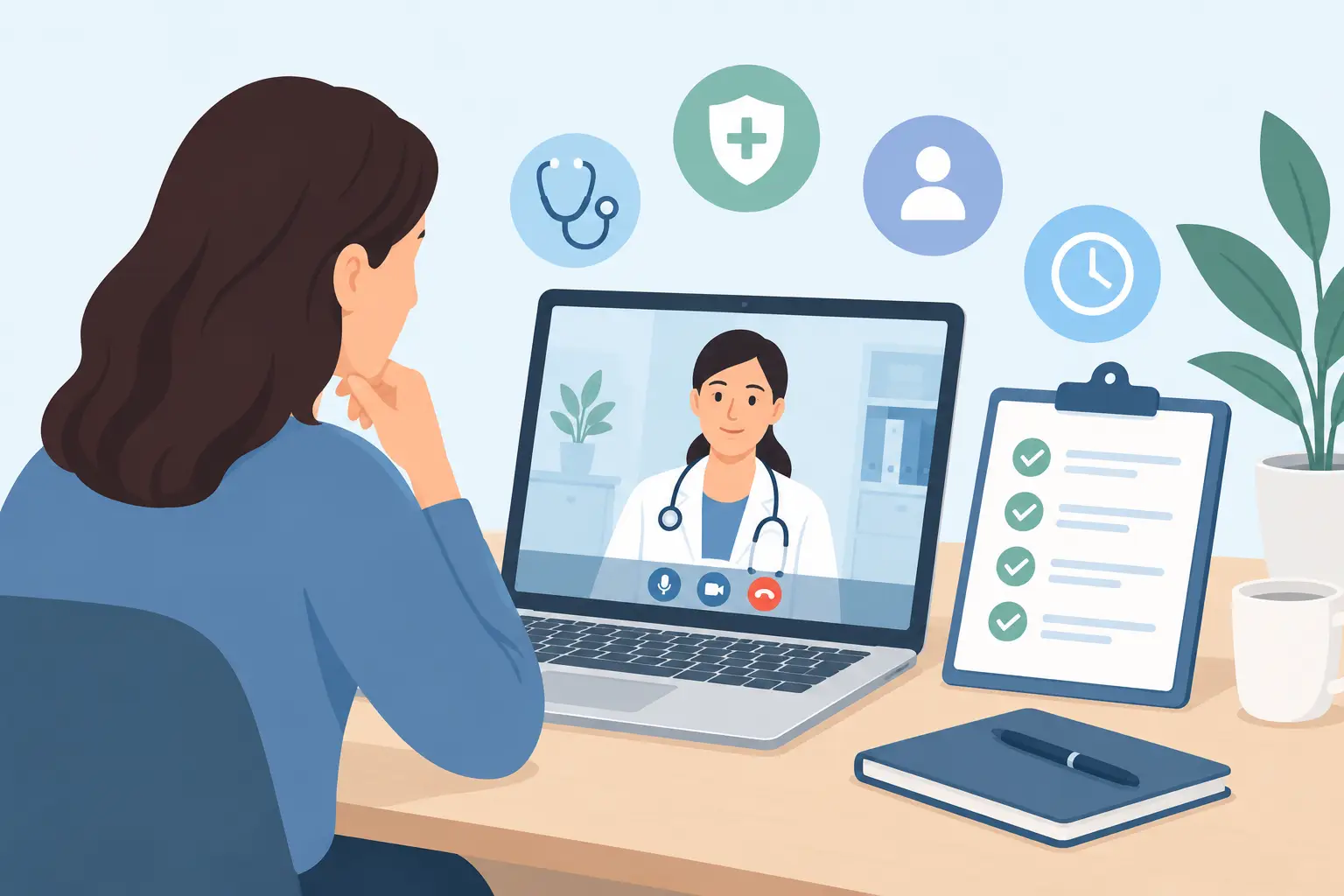
If you need to see a specialist, the slowest part is often not the appointment itself – it is getting the referral sorted. An online GP referral can remove that bottleneck, especially when your issue is straightforward and you already know you need the next step organised quickly.
For many Australians, that means no travel, no waiting room, and no reshuffling a workday just to ask a GP for paperwork. Instead, you can speak with an Australian-registered doctor by phone or video, explain your symptoms or ongoing condition, and find out whether a referral is clinically appropriate.
What is an online GP referral?
An online GP referral is a specialist referral issued after a telehealth consultation with a qualified GP. The referral itself serves the same practical purpose as one provided in a clinic. It tells the specialist why you are being referred, includes relevant medical details, and helps support continuity of care.
The format may be digital, but the medical decision is not automatic. A GP still needs to assess your situation, ask questions, and decide whether a referral is suitable. That matters because not every concern needs a specialist, and not every condition can be safely assessed through telehealth alone.
For patients, the main difference is convenience. You book online, attend the consultation from home or work, and if appropriate, receive the referral digitally without the usual back-and-forth of an in-person visit.
When an online GP referral makes sense
Telehealth is particularly useful when the reason for referral is clear, the history is well established, or the GP can make a safe judgement without a physical examination. This often applies when you have an ongoing issue, a recurring condition, previous test results, or a specialist review that needs renewing.
It can also suit patients who live regionally, work full time, care for children, or simply want to avoid spending half a day in transit and a waiting room for an administrative but still medically necessary step.
Common examples include referrals for skin concerns, women’s health follow-up, men’s health concerns, mental health support, specialist review of ongoing symptoms, or further investigation after pathology. In some cases, the GP may also decide that your symptoms are better managed with initial treatment, tests, or monitoring before a specialist is involved.
That is the part many people miss. A referral is not a formality. It is a clinical decision, and a good GP will not treat it like a checkbox.
When telehealth may not be enough
There are situations where an online GP referral may not be suitable on its own. If your symptoms suggest something urgent, complex, or difficult to assess remotely, the doctor may advise an in-person examination, immediate urgent care, or emergency assessment.
For example, chest pain, severe shortness of breath, signs of stroke, heavy bleeding, or sudden severe abdominal pain are not problems to solve with routine telehealth. Likewise, if a proper physical examination is essential to decide what is going on, a responsible GP may pause the telehealth pathway and direct you to a face-to-face service.
This is not a drawback. It is how safe telehealth should work. Fast access is useful, but only when matched with proper clinical judgement.
How the online GP referral process usually works
The process is typically simple from the patient side. You choose a consultation time, complete basic details, and speak with a GP by phone or video. The doctor asks about your symptoms, medical history, current medicines, relevant past treatment, and why you think a referral may be needed.
If you have supporting information such as previous results, discharge paperwork, or the name of a specialist clinic, that can help. It gives the doctor more context and may reduce delays.
After the assessment, one of a few things usually happens. The GP may issue the referral, recommend another first step such as treatment or tests, ask for more information, or advise that your situation needs in-person care. If a referral is provided, it is generally sent electronically so you can use it straight away.
That speed is often the biggest advantage. For people managing work, family, study, or travel constraints, the ability to handle the whole step online can make specialist care far easier to access.
What a GP considers before writing a referral
A referral should be clinically justified and detailed enough to help the receiving specialist. That means the GP is not just confirming that you asked for one. They are forming a view about what care is needed, how urgent it is, and which specialty is appropriate.
They may consider how long symptoms have been going on, whether they are worsening, what treatment has already been tried, whether tests are needed first, and whether telehealth gives enough information to refer safely. They may also look at whether another pathway is more suitable, such as a pathology request, imaging, a repeat prescription, or routine GP management.
This can feel frustrating if you expected a quick yes. But it protects patients from being sent down the wrong path or arriving at a specialist appointment without the right background information.
Benefits of getting an online GP referral
The obvious benefit is time. You can book from your mobile or laptop, attend the consultation wherever you are, and avoid travel, parking, and waiting rooms. For a busy parent, shift worker, student, or regional patient, that can be the difference between getting care this week or putting it off again.
Privacy also matters. Some patients feel more comfortable discussing personal health concerns from home than from a public clinic. Telehealth can make it easier to start conversations about sensitive symptoms, sexual health, mental health, weight concerns, or ongoing conditions that have been sitting on the to-do list for too long.
There is also a practical benefit in how quickly documents can be delivered. If your referral is approved, receiving it digitally means you can often contact the specialist clinic sooner rather than waiting for printing, collection, or posting.
For straightforward care, services such as TeleDoc are built around that kind of low-friction access – fast booking, Australian-registered GPs, secure consultations, and documents delivered digitally when clinically appropriate.
What to have ready before your appointment
A little preparation can make the consultation smoother. Know your main symptoms, when they started, what has changed, and what outcome you are seeking. If you have relevant scan reports, blood test results, medicine names, or the details of a previous diagnosis, keep them handy.
It also helps to know whether you already have a specialist in mind. Some patients have been told by a physio, psychologist, hospital doctor, or family GP to seek a referral to a particular specialty. Others simply know they need further assessment. Either is fine, but being clear helps the consultation stay efficient.
Choose a quiet place for the call if you can. Good reception, a charged mobile, and a few uninterrupted minutes make a real difference, especially if the doctor needs to ask detailed questions.
Online GP referral versus going to a clinic
Neither option is always better. It depends on your situation. If your issue is straightforward, your history is clear, and a remote assessment is appropriate, online care is often the faster and easier choice. If you need a physical examination, have complex symptoms, or might require immediate testing in person, a clinic may be the better fit.
The trade-off is simple. Telehealth reduces friction, but it cannot replace hands-on examination when that examination is medically necessary. Good care means knowing the difference.
For many routine referral needs, though, the online model works well because it strips out the least useful part of the process: commuting somewhere just to secure access to the next stage of care.
What happens after you receive the referral
Once the referral has been issued, you can usually send it to the specialist clinic or use it when booking. Depending on the specialty and the clinic, wait times can still vary. A fast referral does not always mean a fast specialist appointment, but it does move things forward sooner.
If your symptoms change while you are waiting, do not assume the referral alone is enough. Worsening pain, new symptoms, or anything urgent should be reviewed promptly. A referral starts the specialist process, but your GP remains an important part of ongoing care.
The best use of an online GP referral is simple: getting the right care moving without making everyday life harder than it needs to be. When healthcare can be handled quickly, privately, and with proper clinical oversight, people are more likely to act early rather than wait until a manageable issue becomes a bigger one.