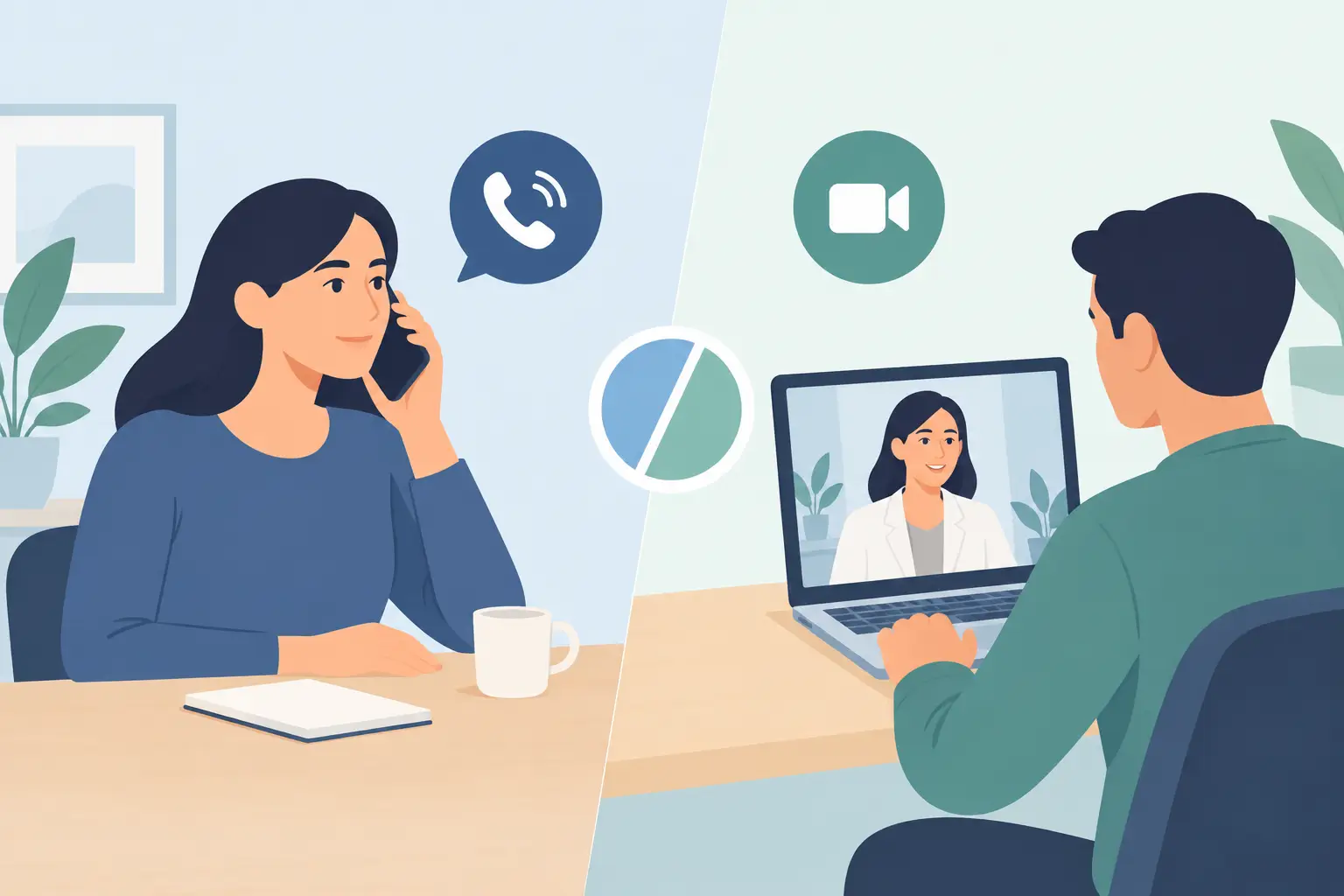
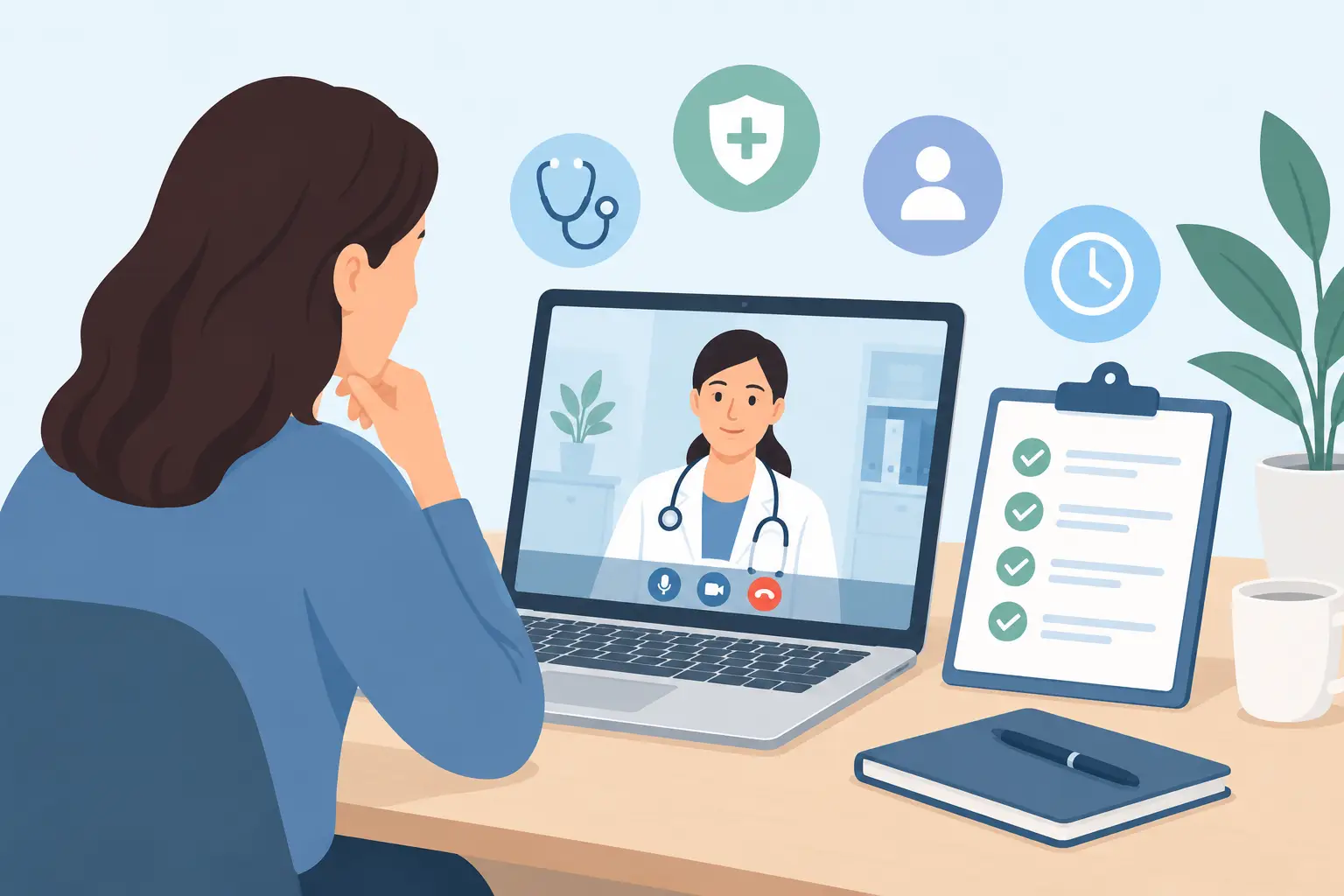
You wake up with a UTI, your child needs a medical certificate for school, or your repeat script has run out the same day your inhaler does. That is exactly where a telehealth GP consult can make life easier. Instead of reshuffling work, sitting in traffic and waiting in a clinic, you can speak with an Australian-registered GP by phone or video from home, the office or anywhere private enough to talk.
For many everyday health needs, that convenience is not a bonus. It is the main point. A telehealth appointment gives people fast access to legitimate medical care for common issues, while still keeping the essentials in place – proper clinical judgement, privacy, and follow-up outcomes such as prescriptions, referrals, pathology requests or certificates where appropriate.
That said, telehealth is not a replacement for every kind of medical care. The best way to think about it is simple: it works very well for straightforward, non-emergency concerns, and less well when a doctor needs to physically examine you, run urgent tests or assess something that could be serious.
What a telehealth GP consult is actually good for
A lot of people still assume telehealth is only for quick script renewals. It can do that, but it is broader than that. A GP can assess symptoms, ask follow-up questions, review your medical history, and decide whether your issue can be managed remotely or needs an in-person review.
In practice, telehealth tends to work well for common primary care matters such as repeat prescriptions, short-term medical certificates, referrals, pathology requests, mild respiratory symptoms, sinus issues, asthma reviews, uncomplicated UTIs, some skin concerns, and general advice around men’s health, women’s health and weight management. It also suits people who know what they need but do not want the friction of booking days ahead or spending half the day in a waiting room.
The benefit is not only speed. Privacy matters too. Some patients are far more comfortable discussing sensitive issues by phone or video, especially if the alternative is a busy clinic reception area and a crowded waiting room. For regional patients, the practical value is even clearer. A remote consult can remove hours of travel for something relatively routine.
When a telehealth GP consult may not be enough
This is where honesty matters. Not every problem should be managed online, and a good telehealth service should be clear about that.
If you have chest pain, severe shortness of breath, signs of stroke, major bleeding, a serious injury, sudden severe abdominal pain, or any symptom that feels urgent or life-threatening, telehealth is not the right first step. You need emergency care.
There is also a middle ground where telehealth may start the process, but not finish it. If you have a rash that is hard to see over video, an ear infection that needs examination, a lump that needs to be felt, or symptoms that are vague but concerning, a GP may tell you to attend a clinic for a physical review. That is not a failure of telehealth. It is exactly how safe medicine should work.
The strongest telehealth model is not one that pretends to do everything. It is one that knows what can be treated efficiently online and what should be redirected promptly.
What to expect from the appointment
A telehealth consult is usually more straightforward than people expect. You book online, choose a suitable time, and join by phone or video without needing to download an app or learn a new system. For busy adults, that matters. If getting medical help feels like another admin task, many people put it off.
Once the consult starts, the GP will ask much the same questions you would hear in a face-to-face appointment. What symptoms are you having? How long have they been there? Have they changed? What medications do you take? Do you have any relevant medical history, allergies or recent test results?
If your concern can be safely managed online, the practical next step often happens quickly. You may receive an e-script by SMS, a medical certificate by email, or a referral or pathology request, depending on what is clinically appropriate. For patients, this is often the biggest difference. The appointment does not just end with advice. It can produce the paperwork or treatment pathway you need straight away.
Why telehealth works so well for everyday care
Most routine healthcare is not complicated. It is just inconvenient.
People need a GP for common reasons that do not always justify the time cost of an in-person visit. A repeat script should not mean taking half a day off work. A straightforward certificate should not require sitting near other unwell patients. A simple referral should not involve weeks of scheduling friction.
That is why convenience is not a superficial benefit in healthcare. It changes behaviour. When access is easier, people are more likely to seek help early, keep treatment going, and deal with problems before they become more disruptive.
For parents, this can mean handling a child’s everyday health need between school drop-off and meetings. For students, it can mean getting care without crossing town. For people in rural or regional Australia, it can mean access that feels normal rather than delayed and difficult. For anyone managing work, family and life admin, it can simply mean less wasted time.
How to know if online care is right for your issue
A useful test is to ask whether the doctor mainly needs your history, symptoms and context, or whether they also need to physically examine you.
If the issue is likely to be assessed well through conversation and visual review, telehealth is often a good fit. If the issue depends on touch, listening to your chest in person, checking vital signs, or doing a procedure, you may need a clinic visit.
It also depends on urgency. Same-day online access is valuable for non-emergency problems that still need prompt attention. That includes things like script renewals, a new UTI, worsening sinus symptoms, or a certificate when you are too unwell to attend work. But speed should never come at the expense of clinical judgement. The right question is not just can this be done online, but should it be.
The trust question matters
Convenience only works if patients trust the service behind it. That means consulting with fully licensed GPs, not anonymous providers with vague credentials. It means clear pricing, secure handling of health information, and a process that feels professional from booking through to follow-up.
It also means recognising the limits of remote medicine. If a GP cannot help safely online, you should be told so clearly. Services like TeleDoc build trust by keeping the model simple: quick access to Australian-registered doctors for everyday non-emergency care, transparent private billing, no unnecessary app download, and a refund if the doctor is unable to help.
That kind of clarity matters because patients are not just buying speed. They are looking for legitimate, regulated care that fits around real life.
Common reasons people book instead of waiting
In many cases, the decision to book is less about severity and more about timing. People want to get ahead of an issue before it becomes a bigger disruption. Running out of medication, needing treatment before a weekend, or wanting prompt advice without taking time off can all make telehealth the better option.
There is also the reality that many clinic appointments are not truly convenient, even when they are available. You may get a booking three days from now, at a time that clashes with work or school pick-up, followed by a commute and a wait once you arrive. Telehealth removes most of that friction. For the right problem, that is a meaningful improvement rather than a minor one.
A practical option, not a lesser one
Some people still treat remote care as second best. In reality, a telehealth GP consult is often the most efficient and sensible format for common healthcare needs. It is not about cutting corners. It is about matching the type of care to the type of problem.
When the issue is suitable, online care can be fast, private and clinically appropriate. When it is not suitable, the right outcome is being directed to in-person care without delay. That balance is what makes telehealth genuinely useful.
If your health concern is routine, time-sensitive and non-emergency, the smartest move is often the simplest one: get medical advice without the waiting room, and get on with your day.