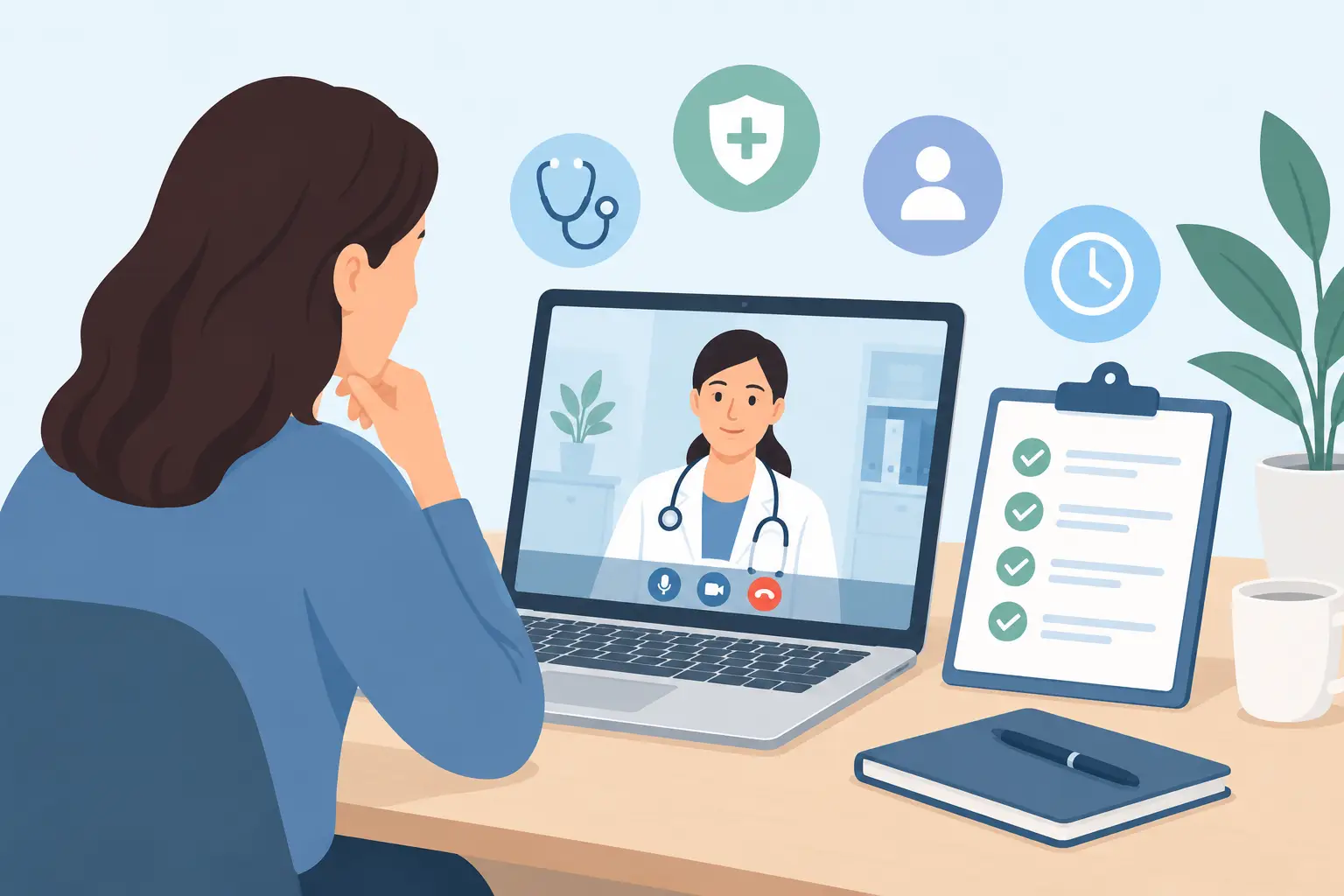
A headache that will not shift, a sudden UTI, a child home sick, or a flare-up that makes a commute unrealistic – illness rarely arrives with enough notice to sit in a clinic waiting room. A telehealth certificate for sick leave can help you obtain appropriate medical documentation after speaking with an Australian-registered GP, from wherever you are.
For many everyday, non-emergency concerns, a phone or video consultation gives your doctor enough context to assess your symptoms, discuss treatment and decide whether a medical certificate is clinically appropriate. It is healthcare on your mobile, with a practical outcome for your workplace when you need it.
What is a telehealth certificate for sick leave?
A telehealth certificate for sick leave is a medical certificate issued following a remote consultation with a qualified doctor. It may confirm that you were assessed as unfit for work for a specified period, or that you needed to care for an immediate family or household member, depending on your circumstances and your doctor’s assessment.
The certificate is not automatic simply because you have booked an appointment. A GP must make an independent clinical judgement based on the information available during the consultation. That is why an honest, clear description of your symptoms, when they began and how they affect your ability to work matters.
For a straightforward short illness, telehealth can be a sensible option. If your symptoms need a physical examination, testing, urgent treatment or a more detailed review, the GP may advise you to attend an in-person clinic or another appropriate service. This is a safeguard, not an inconvenience.
When telehealth may be suitable
Telehealth is often useful when you have a common illness or health concern that can be safely assessed by phone or video. This might include cold and flu symptoms, gastro, migraines, sinus symptoms, a urinary tract infection, period pain, a minor skin concern, or a short-term mental health concern affecting your capacity to work.
It can also be helpful if leaving home is difficult, you live regionally, you are caring for someone else, or you need to avoid passing a contagious illness around the office, public transport or a waiting room.
However, some symptoms are not suited to a remote certificate-only approach. Chest pain, difficulty breathing, signs of a stroke, severe allergic reactions, heavy bleeding, fainting, serious injury, severe abdominal pain or thoughts of self-harm need urgent assessment. Call 000 for an emergency. For less immediate but concerning symptoms, arrange in-person care promptly.
How to get a medical certificate through telehealth
The process is designed to be straightforward, but the consultation itself is still a real medical appointment. Allow enough time to explain what is happening rather than treating it as an administrative task.
Book a GP consultation
Choose a suitable appointment time and provide accurate contact details. With TeleDoc, you can book online and speak with an Australian-registered GP by phone or video, with no app download required. Have your Medicare details and current medication list available if relevant, although the doctor may not need them for every consultation.
Explain your symptoms and work situation
Tell the GP when your symptoms started, whether they are improving or worsening, what treatment you have tried, and what your job involves. A sore throat may affect a teacher differently from someone working alone from home. Likewise, back pain, dizziness or anxiety may have different practical effects depending on whether your role involves driving, machinery, physical work, customer-facing duties or concentrated screen work.
Be direct about the dates you need assessed. Your doctor will decide what period, if any, is medically supported. Do not delay seeking care in the hope of obtaining documentation for a past absence later. Whether a certificate can cover earlier dates depends on the clinical circumstances and the doctor’s professional judgement.
Receive the outcome of the assessment
If the GP determines a certificate is appropriate, it can be sent digitally to your mobile or email after the consultation. You can then provide it to your employer according to your workplace process. Keep a copy for your records, particularly if you are submitting leave through an HR portal.
The GP may also provide advice about rest, treatment, prescriptions, further testing or when to seek review. Follow that advice even if you feel pressure to return to work quickly. A certificate supports your leave request, but looking after the underlying health issue is the point of the appointment.
Will your employer accept an online medical certificate?
In most Australian workplaces, a genuine medical certificate issued by a registered doctor can be used as evidence for personal or carer’s leave when evidence is required. Employees should notify their employer as soon as practicable that they will be absent and advise how long they expect to be away.
Your employer, award, enterprise agreement or workplace policy may set out when evidence is needed and how it should be submitted. Some employers ask for evidence for every absence, while others only ask after a certain number of days. Check the policy if you are unsure, especially when you are taking more than a day or two away from work.
Medical certificates generally do not need to disclose your diagnosis. Your health information is private. A certificate commonly confirms the period you were unfit for work or needed to provide care, without sharing details your employer does not need to manage your leave.
If your workplace has a particular form or process, mention this during the consultation. A GP can consider relevant details, but cannot make claims that are not clinically justified or complete documents that require information outside the consultation.
Make your telehealth appointment more useful
A little preparation can make the discussion faster and safer. Take your temperature if you have one, note when symptoms began, and be ready to describe anything that makes them better or worse. If you have a visible issue such as a rash, good lighting and a clear video connection can help the doctor assess it.
Find a private place for the call where you can speak openly. This matters if you are discussing mental health, sensitive symptoms or family circumstances. It also helps to have a pen nearby to note treatment instructions, pharmacy details or warning signs the GP wants you to watch for.
Be cautious about services that promise certificates without a real consultation or guarantee an outcome before a doctor has assessed you. Legitimate telehealth involves a proper clinical assessment, secure handling of your information and a doctor who can say when remote care is not the right option.
A certificate is one part of getting better
Taking a sick day can feel difficult when work is busy, but working through an infectious illness, significant pain or exhaustion can make recovery harder and affect the people around you. If you are genuinely unwell, timely care and clear communication with your employer are usually better than trying to push through.
A telehealth consultation gives you a private way to discuss what is going on, receive GP advice and, where clinically appropriate, obtain the documentation you need. Book early, be open with your doctor and give yourself the time to recover properly.