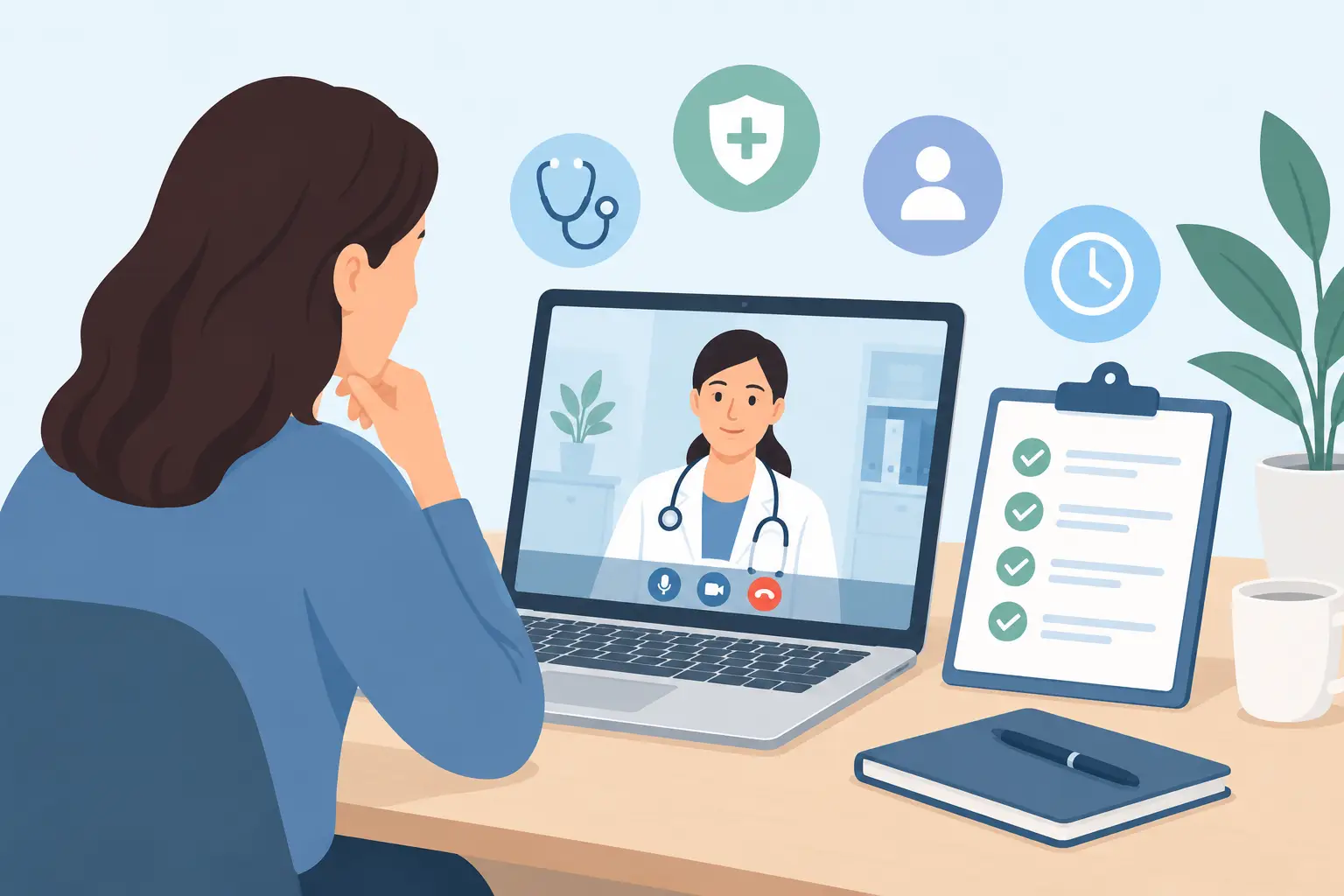
When your head feels blocked, your face aches, and bending over makes the pressure worse, getting to a clinic can feel like one task too many. Sinus infection telehealth gives Australians a faster way to speak with a GP, get advice on treatment, and find out whether you need a prescription, rest, or an in-person review.
For a lot of people, the main appeal is simple. You can book online, speak with an Australian-registered doctor by phone or video, and sort out a common issue without spending half the day in a waiting room. That matters when you are working, looking after kids, studying, travelling, or just feeling too unwell to head out.
When sinus infection telehealth makes sense
Many sinus infections can be assessed through telehealth, especially when your symptoms are clear and you can describe how they have changed over time. A GP will usually want to know about blocked or runny nose, facial pain or pressure, thick nasal discharge, headache, reduced sense of smell, fever, bad breath, fatigue, and whether the symptoms followed a cold.
Timing matters. A lot of sinus infections are viral and improve on their own with supportive care. If your symptoms have only been present for a few days, your doctor may recommend pain relief, saline sprays, rest, and monitoring rather than antibiotics. That is not a brush-off. It is often the safest and most appropriate approach, because antibiotics do not help viral infections and can cause side effects.
Telehealth can also be useful when symptoms are lingering longer than expected, getting worse instead of better, or returning after a short improvement. In those cases, a GP can help decide whether the pattern sounds more like bacterial sinusitis, ongoing inflammation, allergy-related congestion, or another issue entirely.
What a GP can assess during a telehealth appointment
A sinus infection telehealth consultation is not just a quick script request. It is a proper GP review focused on your symptoms, risk factors, and whether remote care is suitable.
Your doctor will usually ask how long you have been unwell, where the pressure is located, whether one side is worse than the other, and what your mucus looks like. They may ask about fever, tooth pain, ear pressure, cough, recent colds, hay fever, asthma, smoking, and whether you have had repeated sinus infections before.
The goal is to work out two things. First, is this likely to be an uncomplicated sinus infection or another upper respiratory issue? Second, is telehealth enough, or do you need to be examined in person?
That second point is important. Telehealth is convenient, but it has limits. A doctor cannot physically examine your sinuses, ears, throat, or chest through a phone call alone. Sometimes your history gives enough information to guide treatment. Sometimes it does not. Good telehealth care includes knowing when a face-to-face review is the safer option.
Treatment options after a telehealth consult
What happens next depends on your symptoms and medical history. For many patients, treatment is conservative at first. That can include advice on hydration, saline rinses or sprays, steam avoidance if it irritates you, and over-the-counter pain relief if appropriate for you. If allergies seem to be contributing, your GP may discuss antihistamines or a nasal spray.
If the doctor believes a prescription medicine is appropriate, they may issue an e-script after the consultation. That can be sent to your mobile or email, which saves another step when you are already feeling ordinary. Some people expect antibiotics straight away, but that is not always the right outcome. A careful GP will weigh symptom duration, severity, fever, worsening after initial improvement, and any relevant health conditions before deciding.
This is where telehealth can actually be more efficient than people think. You are not waiting around to find out if someone can see you. You get an assessment, a treatment plan, and if suitable, practical next steps on the same day.
When telehealth may not be enough
There are times when a sinus infection needs an in-person examination rather than remote care. If you have swelling around the eyes, severe headache, high fever, confusion, vision changes, shortness of breath, neck stiffness, or you are rapidly getting worse, you need urgent medical attention. Those are not symptoms to manage through a routine telehealth booking.
There are also less dramatic situations where face-to-face care may still be the better option. If you have persistent symptoms that keep returning, significant pain on one side of the face, a history of immune problems, recent facial injury, or you are not improving despite treatment, a GP may recommend an in-person review. You might need a closer examination, different treatment, or sometimes referral for further assessment.
That is not a failure of telehealth. It is part of using it properly. The best remote care is clear about what can be managed online and what needs hands-on review.
Why Australians use telehealth for sinus infections
The biggest reason is convenience, but convenience is only useful when care is legitimate and clinically sound. For common non-emergency conditions, telehealth can remove the friction that makes people delay getting help. You do not need to travel while congested and miserable. You do not need to sit in a waiting room around other sick patients. And if you need a prescription or medical advice quickly, the process can be far more straightforward.
For people in regional areas, telehealth can be even more valuable. Access to a GP may mean longer travel times, fewer same-day appointments, or fitting healthcare around work and family commitments. A remote consultation gives you a practical option when the issue is suitable for online assessment.
Privacy matters too. Not everyone wants to explain sinus symptoms, medication needs, or time off work at a busy reception desk. Telehealth offers a more discreet way to handle everyday healthcare.
How to prepare for a sinus infection telehealth appointment
A little preparation makes the consult faster and more useful. Before your appointment, think about when your symptoms started, whether they are improving or worsening, and what you have already tried. If you know your temperature, have tested for COVID-19 or influenza recently, or are using any regular medicines, have that information ready.
It also helps to be specific rather than broad. Saying your face hurts is useful, but saying you have pressure under your eyes for eight days, thick yellow-green discharge, worse pain when bending forward, and a fever yesterday gives the GP much more to work with. Telehealth relies heavily on history, so detail matters.
If your appointment is by video, choose a quiet spot with decent reception or internet. If it is by phone, keep your mobile nearby and make sure you can answer an unfamiliar number. Small things like that help avoid delays.
What to expect from the process
With a service designed around everyday healthcare, the process is usually simple. You book online, choose a suitable time, and speak with an Australian-registered GP by phone or video. After the consult, any appropriate documents such as an e-script, medical certificate, referral, or request can be issued digitally.
That streamlined setup is especially useful when you are trying to get back to work, sleep properly, or simply breathe through your nose again. TeleDoc is built for exactly this kind of low-friction care, where speed and professional standards need to sit side by side.
Still, the right outcome is not always the fastest one. Sometimes that means self-care advice. Sometimes it means a prescription. Sometimes it means being told you should be seen in person. A dependable telehealth service does not force every problem into an online solution. It gives you a clear next step.
A quick word on expectations
Sinus symptoms can feel awful, but not every blocked nose or pounding forehead means antibiotics are needed. That can be frustrating if you are hoping for an instant fix. The reality is that the best treatment depends on the cause, how long you have been sick, and whether there are signs of complications.
What telehealth does well is remove the hassle from getting proper advice. Instead of guessing, waiting it out for too long, or dragging yourself to a clinic unnecessarily, you can speak with a GP and get a plan that fits your situation.
If your symptoms are persistent, uncomfortable, or starting to interfere with daily life, getting medical advice sooner can save time and stress later. The easiest healthcare is not the one with the fewest steps. It is the one that gets you the right care, at the right time, without making a bad day harder.