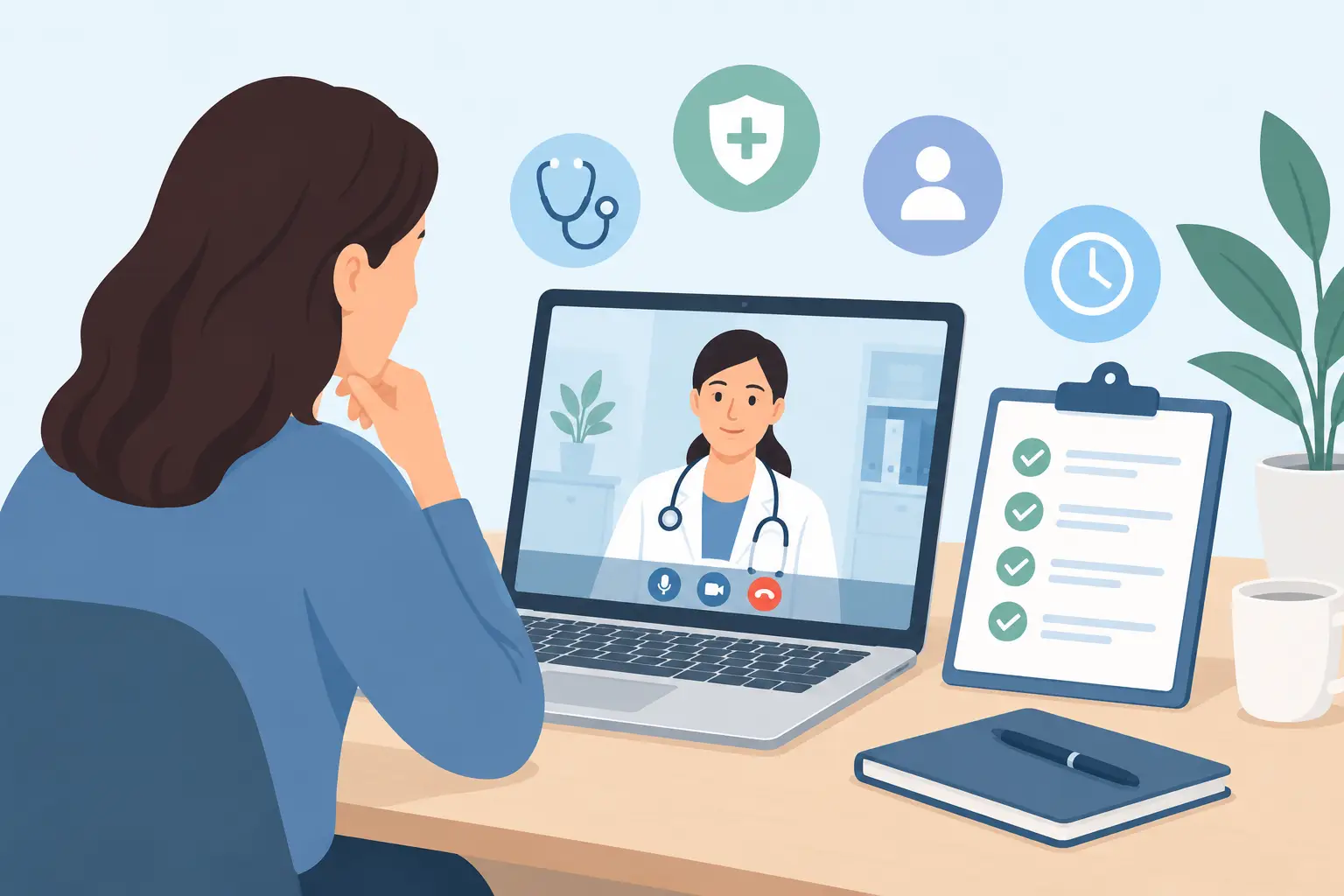
A script runs out on a workday. Your child wakes with a rash. A UTI starts to become uncomfortable while you are away from home. In these moments, the question is rarely whether you need medical advice. It is whether private telehealth vs in person care is the better way to get it.
For many everyday health concerns, a phone or video appointment can give you prompt access to an Australian-registered GP without travel, a waiting room or rearranging your whole day. But telehealth is not designed to replace every physical examination. Choosing well means understanding what each appointment type can do, where its limits are and when to seek urgent care.
Private Telehealth vs In Person: The Main Difference
The core difference is how the GP assesses you. During a private telehealth consultation, you speak with your doctor by phone or video. You can discuss symptoms, medical history, medications and next steps from wherever you have a private, reliable connection. Depending on your clinical needs, the GP may provide advice, an e-script, medical certificate, referral or pathology request.
An in-person consultation gives the doctor the option to examine you directly. They may check your temperature, blood pressure, oxygen levels, ears, throat, skin, abdomen or joints. Physical assessment can make a meaningful difference when a diagnosis depends on what the doctor can see, feel, hear or measure.
Neither option is automatically better. The right choice depends on the reason for your appointment, how unwell you feel and whether an examination is likely to change your care.
When Private Telehealth Is a Practical Choice
Telehealth is particularly useful when the issue is straightforward, familiar or mainly discussion-based. It is often a convenient option for repeat prescriptions, medication questions, medical certificates, specialist referrals, pathology requests and general GP advice.
It can also suit common conditions where a GP can safely assess your symptoms through a detailed conversation and, where appropriate, video. This may include cold and flu symptoms, sinus concerns, uncomplicated UTIs, asthma management, skin issues that are visible on camera, sexual health questions, women’s health concerns and men’s health concerns. Your doctor will still decide whether telehealth is clinically appropriate after hearing your symptoms.
The practical benefit is time. Rather than allowing for transport, parking, sitting in a clinic and travelling home, you can book online and speak to a GP from your home, office or car – provided you are safely parked and can talk privately. This can be especially helpful for parents managing school pick-up, professionals between meetings, students during exam periods and people living in regional or rural areas.
Privacy is another reason people choose telehealth. Some health topics are difficult to raise in a busy reception area or while sitting near other patients. A private call lets you have that conversation in familiar surroundings. Choose a quiet place, use headphones if needed and make sure the GP can reach you on your mobile.
TeleDoc offers phone and video consultations with fully licensed, Australian-registered GPs, with no app download required. If the doctor cannot help with your concern, you receive a full refund.
What you may receive after a consultation
If clinically appropriate, your GP can send practical follow-up documents after your appointment. An e-script may arrive by SMS, while certificates, referrals or pathology requests may be sent by email or SMS. The outcome always depends on the doctor’s assessment. A consultation does not guarantee a prescription, certificate or referral, because the GP must make a decision that is safe and medically appropriate.
That professional judgement matters. Fast access should never mean automatic treatment. A good telehealth appointment gives you clear advice, explains what to do next and tells you when an in-person review is needed.
When an In-Person Appointment Is Better
In-person care is usually the better option when you need a hands-on examination, tests taken at the clinic or treatment that cannot be provided remotely. For example, a doctor may need to listen to your chest if you have concerning breathing symptoms, inspect an injury closely, examine an earache, assess significant abdominal pain or check a wound.
A physical visit is also more suitable when symptoms are new, severe, getting worse or difficult to explain. If you have a lump, persistent pain, marked swelling, a high fever, a serious rash, reduced movement after an injury or unexplained weight loss, an examination may be necessary to work out what is happening.
Telehealth can still be a useful starting point in some of these situations. A GP may assess your history, advise how urgently you need to be seen and direct you to the right service. However, if the doctor recommends an in-person review, it is important to arrange it promptly rather than trying to manage the problem through repeated remote appointments.
Some situations need urgent help, not a standard appointment
Do not wait for a routine telehealth or in-person GP booking if you have chest pain, severe shortness of breath, signs of stroke, severe bleeding, a serious allergic reaction, confusion, loss of consciousness or thoughts of harming yourself. Call 000 or attend the nearest emergency department.
For children, older people, pregnant patients and people with complex health conditions, the threshold for in-person assessment may be lower. If you are unsure, explain the full situation when booking or speaking with the GP. It is better to be cautious when symptoms are concerning.
How to Choose the Right Type of Appointment
Start with one practical question: does this concern need a physical examination today? If the answer is probably no, private telehealth may save considerable time while still giving you legitimate GP care. If the answer is yes or you are unsure, an in-person clinic may be the more direct path.
Think about the nature of the issue as well. A request to renew a medication you have used safely, discuss pathology results or obtain a certificate for a short illness is often well suited to telehealth. A painful ear, a sports injury, worsening asthma symptoms or a problem that needs swabs, scans or observations may be better managed face to face.
Your access also matters. For someone in a regional town, caring for young children or working shifts, travelling to a clinic can be a real barrier. Telehealth can remove that barrier for suitable concerns. On the other hand, if your internet connection is unreliable or you do not have a quiet, private place to speak, a phone consultation or an in-person visit may work better.
There is no need to diagnose yourself before booking. Tell the GP what is happening, when it started, what makes it better or worse and what you have already tried. The doctor can then determine whether remote care is enough or whether you need to attend a clinic.
Make Your Telehealth Appointment More Useful
A few minutes of preparation can help your consultation run smoothly. Have your Medicare details, current medications, allergies and relevant medical history nearby. If you are discussing a visible concern such as a rash, good lighting and a charged phone can help during a video call.
Be specific about your symptoms. Mention when they began, whether they are improving or worsening, your temperature if you have checked it and any treatments you have taken. If you need a repeat script, know the medication name and dose. If you are seeking a medical certificate, be ready to explain how your illness is affecting your ability to work or study.
It is also worth being open about what you need from the appointment. You might say that you are concerned about a UTI, need advice about asthma symptoms or want to discuss a referral. This gives the GP a clear starting point, while leaving room for the clinical questions needed to assess you properly.
Convenience Should Still Include Continuity of Care
Fast appointments are valuable, but your broader health record matters too. Keep your regular GP informed about significant diagnoses, medication changes, hospital visits and ongoing treatment plans. If you have a chronic or complex condition, an in-person GP who knows your history may be best placed to coordinate long-term care.
Telehealth works well alongside that relationship. It can handle time-sensitive, everyday needs while helping you avoid unnecessary delays for appropriate care. The best choice is the one that matches the medical issue, not simply the one that is closest or quickest.
When you need straightforward GP support and an examination is unlikely to be necessary, a private telehealth appointment can put practical care within reach in minutes. When your symptoms call for hands-on assessment, choosing an in-person visit is the sensible next step.