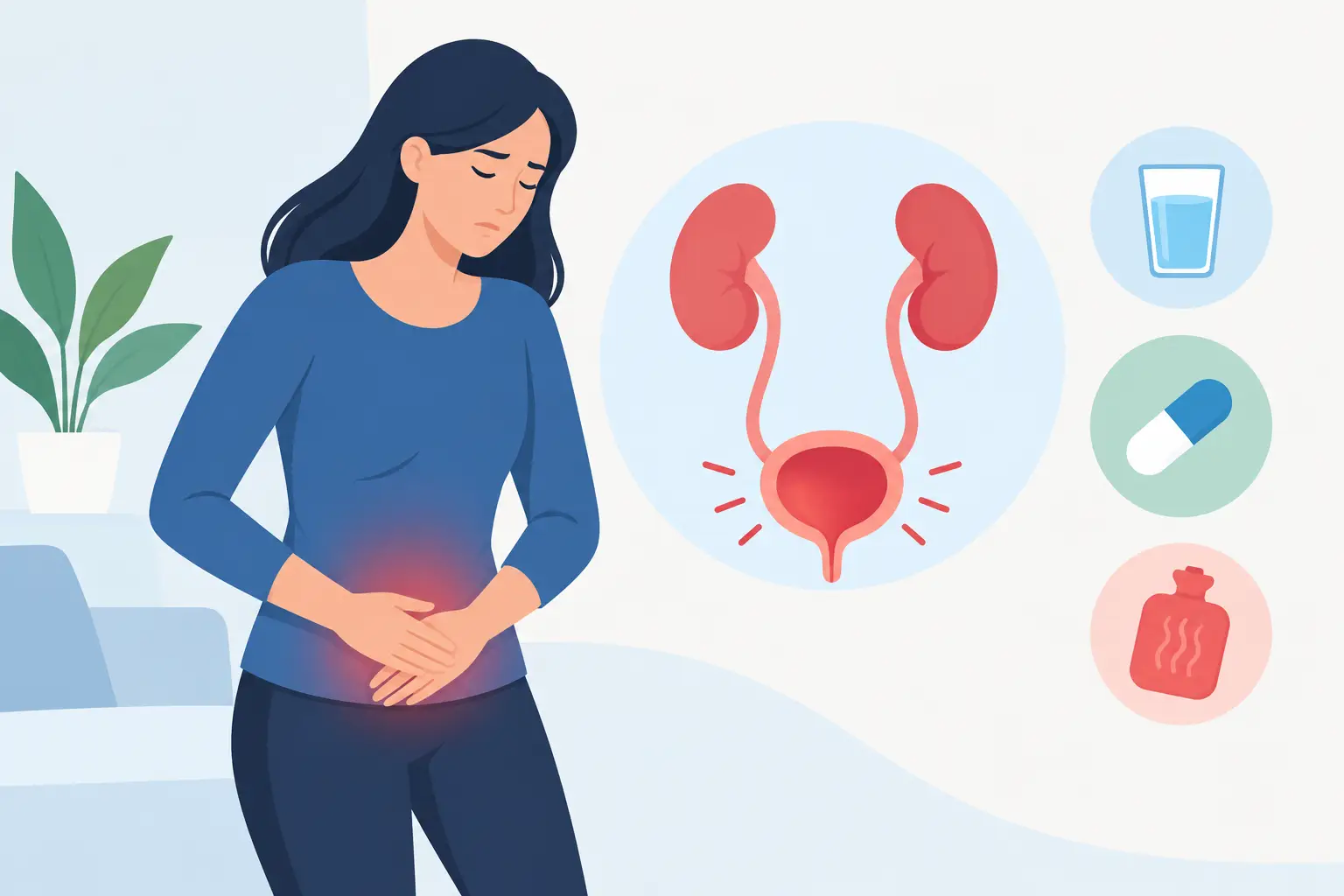
A burning sensation when you wee, the need to rush to the toilet, then only passing a small amount – a UTI / urinary tract infection can make an ordinary workday, school run or weekend feel suddenly unmanageable. The good news is that uncomplicated bladder infections are common and often straightforward to treat. The key is knowing when a GP consultation is appropriate and when symptoms need urgent, in-person care.
What is a UTI or urinary tract infection?
A urinary tract infection occurs when bacteria enter part of the urinary system. Most commonly, this affects the bladder, known as cystitis. Less commonly, infection can travel upwards to the kidneys. Kidney infections are more serious and need prompt medical assessment.
UTIs are more common in women because the urethra is shorter, making it easier for bacteria to reach the bladder. They can affect anyone, though, including men, children and older adults. Pregnancy, diabetes, urinary catheters, kidney stones, an enlarged prostate and a history of recurrent infections can also change how a doctor assesses and manages symptoms.
A GP will consider your symptoms, medical history, medicines, allergies and individual risk factors before recommending treatment. That matters because not every burning or frequent urination symptom is a simple bladder infection.
Common UTI symptoms
Symptoms of a lower UTI, affecting the bladder or urethra, often develop quickly. You may notice burning or stinging when urinating, needing to wee more frequently, a strong urge to urinate, or passing only small amounts of urine. Urine may look cloudy, smell stronger than usual or contain blood.
Some people also experience discomfort or pressure low in the abdomen. Symptoms can be unpleasant, but severity alone does not always show whether an infection is mild or serious. Your overall health and any warning signs are just as relevant.
Similar symptoms can have other causes. Vaginal thrush, irritation from soaps or products, sexually transmissible infections, kidney stones and some bladder conditions may all need different care. If you have vaginal discharge, genital sores, pelvic pain, a new sexual partner or concern about an STI, tell the doctor. It helps them recommend the right next step rather than assuming every urinary symptom is a UTI.
When to seek urgent medical care
A suspected UTI needs urgent assessment if you have fever, chills, nausea or vomiting, pain in your back or side below the ribs, or feel very unwell. These can be signs the infection has reached the kidneys or is affecting your body more broadly.
Seek urgent care as well if you are confused, unusually drowsy, faint, unable to keep fluids down, unable to pass urine, or have severe pain. In Australia, call Triple Zero (000) for life-threatening symptoms. If you are unsure where to go, Healthdirect can provide advice by phone.
Pregnant people with urinary symptoms should contact a GP promptly, even if symptoms seem mild. UTIs in pregnancy need careful assessment because untreated infection can create additional risks. Babies and young children, men with possible UTIs, and people with a weakened immune system should also be assessed promptly rather than self-treating.
How a GP can help with UTI symptoms
For many otherwise well adults with typical lower UTI symptoms and no red flags, a telehealth appointment can be a practical first step. A GP can ask targeted questions, review relevant health history and advise whether treatment can begin based on your symptoms or whether you need a urine test, pathology request or face-to-face examination.
Antibiotics may be prescribed when clinically appropriate. They are not automatically needed in every situation, and the choice depends on factors such as allergies, pregnancy, kidney function, recent antibiotic use and local prescribing guidance. Take antibiotics exactly as directed and complete the course unless the prescribing doctor tells you otherwise. Do not use leftover antibiotics or someone else’s medication.
A urine test may be particularly helpful if symptoms are recurrent, unusual, severe, do not improve as expected, occur during pregnancy, or affect a man or child. The test can identify bacteria and show which antibiotic is most likely to work. If a doctor is unable to safely manage your symptoms by telehealth, they can direct you to appropriate in-person care.
TeleDoc connects eligible patients with Australian-registered GPs by phone or video, without the waiting room. For suitable non-emergency UTI symptoms, this can mean getting medical advice and, where clinically appropriate, an eScript sent to your mobile after your consultation.
What you can do while waiting for advice
Drink water regularly if you can, aiming for normal hydration rather than forcing large volumes of fluid. Passing urine when you need to go may be more comfortable than holding on. Rest can help if you are feeling run down.
Pain relief may be useful for some people. Paracetamol can be appropriate for many adults when taken according to the packet directions, but it is not suitable for everyone. Check with a pharmacist or GP if you have liver disease, take other medicines containing paracetamol, are pregnant, or are unsure what you can take. Anti-inflammatory medicines, such as ibuprofen, are not right for everyone and may be unsuitable with kidney problems, stomach ulcers, some heart conditions or during pregnancy.
Urinary alkalinising products may temporarily reduce burning for some people, but they do not treat the infection. They can also interact with certain medicines or be unsuitable for some health conditions. Ask a pharmacist or GP before using them, especially if you are taking antibiotics.
Cranberry products are often discussed, but they should not replace medical assessment or prescribed treatment for an active infection. The evidence for preventing recurrent UTIs is mixed, and they are not a reliable treatment once symptoms have started.
When symptoms should start improving
If antibiotics are prescribed for an uncomplicated bladder infection, many people begin to feel better within one to two days. That does not mean you should stop treatment early. Continue as prescribed, and contact the doctor if symptoms are not improving within 48 hours, are getting worse, or return soon after treatment.
Blood in urine should always be discussed with a clinician. It can occur with a UTI, but it can also have other causes. A doctor may recommend follow-up testing after the infection has settled, particularly if blood persists or recurs.
Reducing the chance of another UTI
Some UTIs cannot be prevented, and having one does not mean you have done anything wrong. For people prone to recurrent infections, a few practical habits may help: drink enough fluid for your usual health needs, do not routinely hold urine for long periods, and wipe from front to back after using the toilet.
For those whose UTIs are associated with sex, urinating after sex and avoiding spermicidal products may help. Fragranced washes, douches and harsh products around the genital area can cause irritation, so gentle external washing with water is usually enough. If infections keep returning, do not simply keep treating them yourself. A GP can look for contributing factors and discuss prevention options suited to you.
A UTI can be disruptive, but you do not need to wait until symptoms become severe to ask for help. If you have typical symptoms and feel otherwise well, timely GP advice can clarify what is going on and help you get back to feeling comfortable sooner.