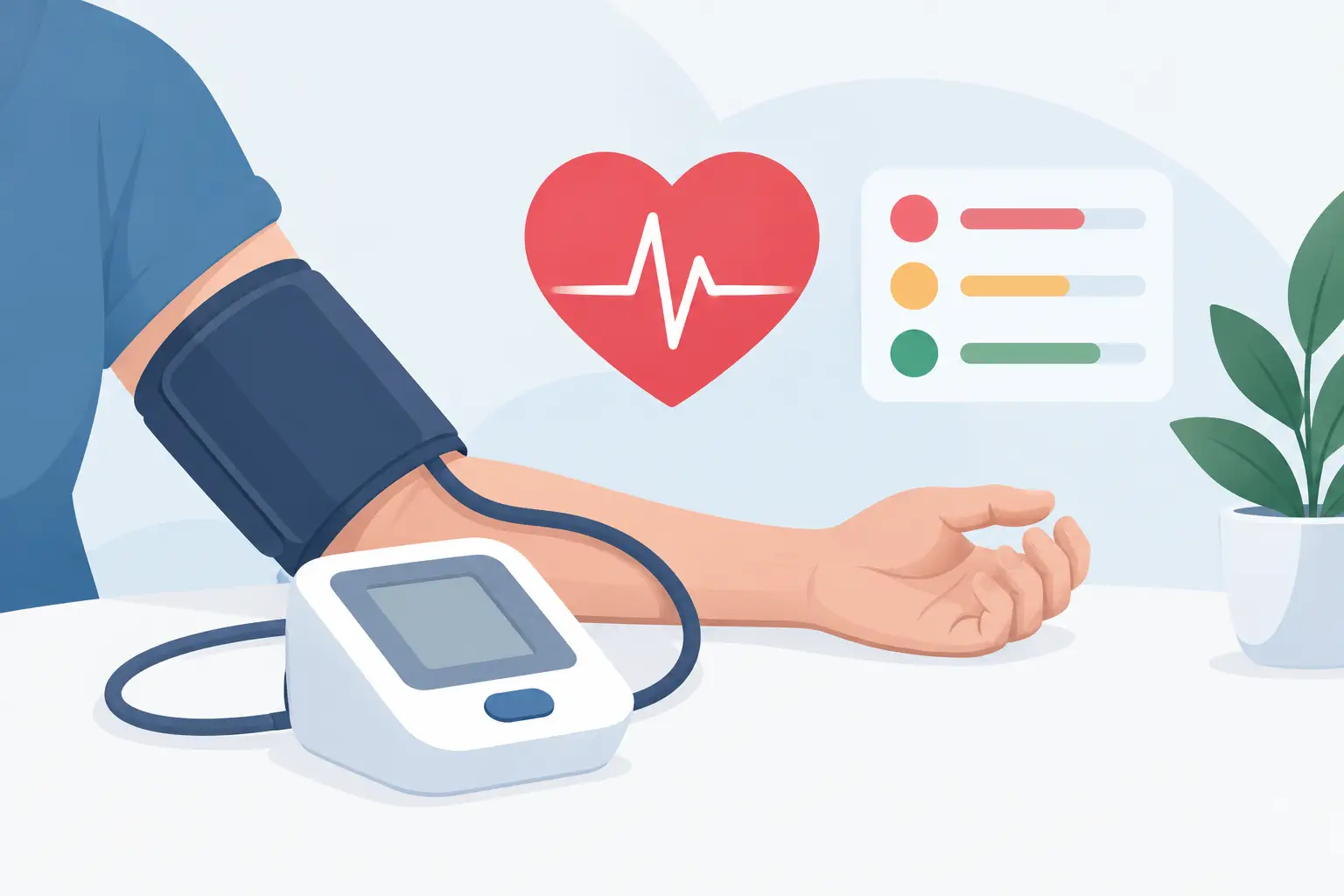
A blood pressure reading can look like just two numbers on a pharmacy machine or home monitor. But it gives your GP useful information about how hard your heart is working to move blood around your body. One high reading is not always a diagnosis, but repeatedly high readings deserve attention – often before you feel unwell.
High blood pressure is common in Australia and usually has no obvious symptoms. That is why regular checks matter, particularly if you have a family history of heart disease, diabetes, kidney disease, sleep apnoea, or if you are over 45.
What do blood pressure numbers mean?
Blood pressure is recorded as two numbers, such as 120/80 mmHg. The top number is systolic pressure: the pressure in your arteries when your heart contracts. The lower number is diastolic pressure: the pressure when your heart relaxes between beats.
For many adults, a reading below 120/80 is considered in the healthy range. Readings can shift through the day depending on activity, stress, caffeine, pain, sleep, alcohol, medicines and even a full bladder. That is why your GP looks for a pattern rather than drawing conclusions from one result.
As a general guide, consistently high readings should be discussed with a GP. A clinic reading of 140/90 or above may be considered high, while home readings are often assessed using a slightly lower threshold. Your individual target may differ if you are pregnant, older, living with diabetes or kidney disease, or taking certain medicines.
Low blood pressure can also cause problems for some people. If you feel faint, dizzy, weak or confused, especially when standing up, seek medical advice. The number alone matters less than the full picture: your symptoms, health history and medications all count.
Why high blood pressure needs attention
When blood pressure stays elevated over time, it can place extra strain on blood vessels, the heart, kidneys, brain and eyes. It is a major risk factor for heart attack and stroke, but it is manageable. Early action can reduce long-term risk significantly.
The difficult part is that high blood pressure often does not cause headaches, flushing or other reliable warning signs. Feeling well does not necessarily mean your reading is in a healthy range. A check-up is the only way to know.
Some people have primary hypertension, meaning there is no single identifiable cause. It tends to develop gradually and can be influenced by genetics, age, weight, diet, alcohol intake, smoking, stress and physical inactivity. Others have secondary hypertension, where another condition or medicine contributes. Kidney problems, hormonal conditions, sleep apnoea, anti-inflammatory medicines, some decongestants and stimulant medicines can all be relevant.
How to check your blood pressure at home
A validated upper-arm monitor is generally more reliable than a wrist monitor. Choose a cuff that fits your upper arm properly. A cuff that is too small or too large can affect the result.
For a useful reading, sit quietly for five minutes with your back supported, feet flat on the floor and arm resting at heart level. Avoid exercise, smoking, caffeine and alcohol for at least 30 minutes beforehand if possible. Do not talk while the monitor is running.
Take two readings about a minute apart and record both. Checking at the same times each day, often morning and evening, gives a clearer picture than occasional spot checks. Keep a note of the date, time, numbers, pulse and anything that could have affected the result, such as poor sleep or a stressful day.
Home monitoring is helpful, but it does not replace professional assessment. Bring your monitor or your recorded readings to an appointment so a GP can check technique and interpret the pattern in context.
Avoid chasing a perfect number
Seeing a higher-than-expected reading can be worrying, and anxiety can push the next reading higher. Take a pause, follow the measurement steps, then recheck as advised. Repeatedly measuring every few minutes is rarely useful and can add stress.
If readings are consistently above your usual range over several days, arrange a GP consultation. Do not start, stop or change prescribed blood pressure medication based only on home readings without medical advice.
Practical ways to support healthy blood pressure
Lifestyle changes can make a meaningful difference, whether you have mildly raised readings or are already taking medication. The right approach depends on your health, preferences and what feels sustainable.
Eating more vegetables, fruit, legumes, wholegrains and minimally processed foods can help. Reducing salt is often useful, particularly salt hidden in packaged meals, processed meats, savoury snacks, sauces and takeaway foods. You do not need to make every meal perfect. Small changes, such as comparing labels and cooking more often, can add up.
Regular movement supports heart health and blood pressure. Brisk walking, cycling, swimming, gardening or structured exercise can all count. If you are starting after a long break, have chest pain, significant breathlessness or other health concerns, check with a GP about the safest plan for you.
Alcohol can raise blood pressure, especially with regular higher intake. Cutting back, having alcohol-free days and staying within Australian alcohol guidelines may help. Quitting smoking is also one of the strongest steps you can take for heart and blood vessel health.
Sleep and stress deserve attention too. Poor sleep, untreated sleep apnoea and ongoing stress can affect readings. A realistic routine – regular sleep times, short walks, time away from work notifications or breathing exercises – is often more useful than an ambitious plan that does not last.
Medication may be recommended when lifestyle changes alone are unlikely to lower risk enough, or when readings are significantly raised. There are several medication options, and finding the right one can take time. Tell your GP about side effects such as dizziness, ankle swelling, cough or fatigue rather than stopping treatment on your own. A different dose or medicine may be suitable.
When to speak with a GP about blood pressure
Book a GP appointment if your home readings are repeatedly high, you have a strong family history of cardiovascular disease, or you have not had your blood pressure checked for some time. It is also worth discussing readings that seem low if you are experiencing dizziness, fainting or falls.
A GP may review your medical history, current medicines, lifestyle, weight and family history. They may recommend repeat measurements, blood tests, an ECG, urine testing or a 24-hour blood pressure monitor. This helps distinguish a temporary rise from ongoing hypertension and looks for possible contributing conditions.
For routine questions, medication reviews or a discussion about recorded home readings, an Australian-registered GP can often assess you by phone or video. TeleDoc offers private, same-day consultations for many everyday health needs, without the waiting room. If your GP needs an in-person examination or urgent assessment, they will guide you on the appropriate next step.
When high blood pressure is an emergency
Seek urgent medical help if you have a very high reading, particularly around 180/120 or higher, along with chest pain, shortness of breath, severe headache, confusion, weakness or numbness on one side, trouble speaking, vision changes, or fainting. Call 000 rather than waiting for a telehealth appointment.
High readings during pregnancy also need prompt medical assessment, especially when paired with severe headache, visual changes, upper abdominal pain, sudden swelling or feeling unwell. Contact your maternity care team, GP or urgent care service for advice.
A blood pressure check takes only a few minutes, but it can give you an early opportunity to protect your future health. If your readings have changed or you are unsure what they mean, record a few careful measurements and speak with a GP – clear advice is far more useful than guessing.