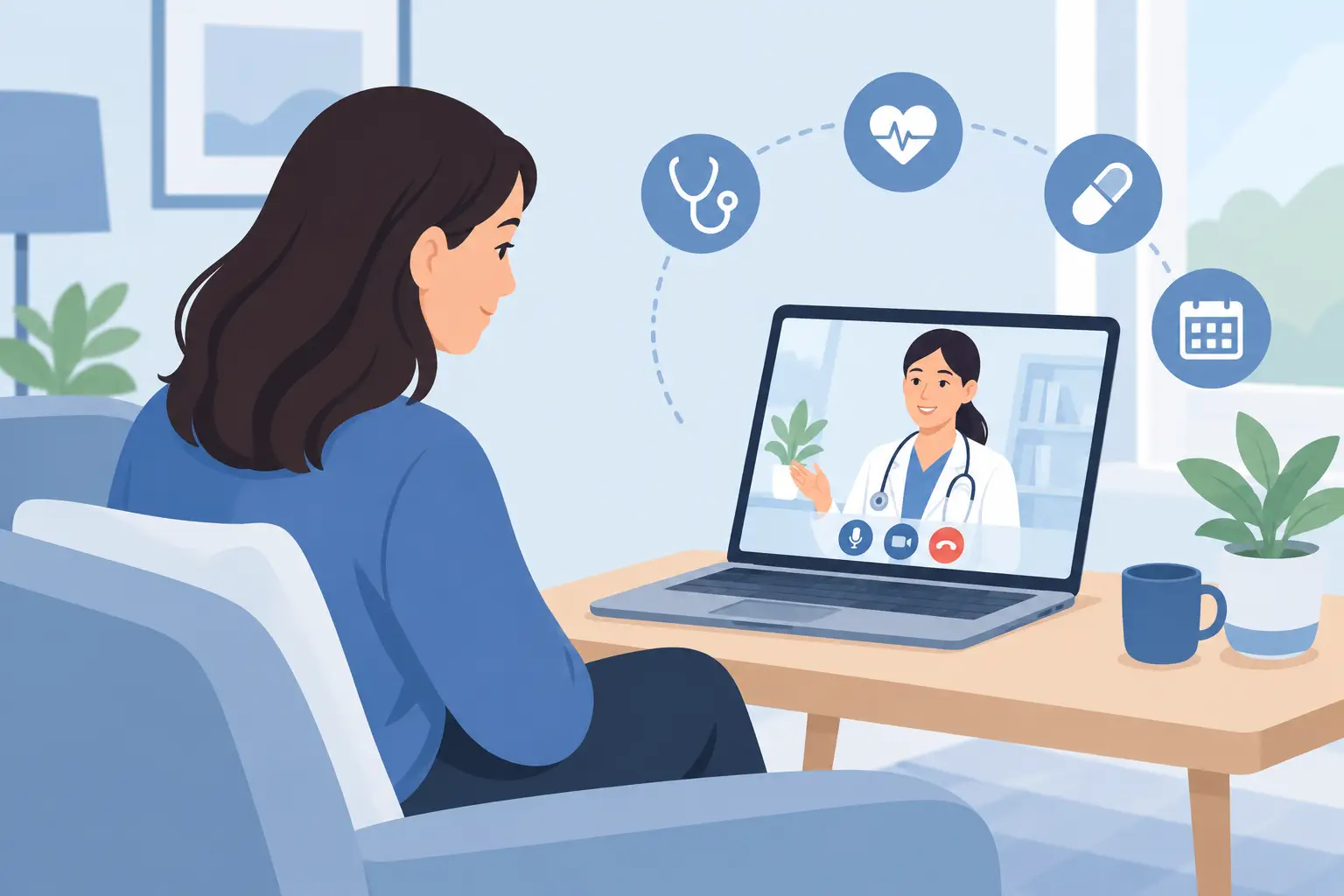
A sore throat before a full day of meetings, a repeat prescription running low, or a child who needs a medical certificate can quickly turn into hours spent travelling and sitting in a waiting room. Virtual care Brisbane patients can access offers another practical option: speaking with an Australian-registered GP by phone or video from home, work or wherever is private and suitable.
For many everyday health needs, an online appointment can provide the same starting point as a clinic visit – a proper conversation about symptoms, medical history and next steps. The key is knowing what virtual care can help with, and when a face-to-face assessment is the safer choice.
What virtual care Brisbane patients can use it for
Virtual care is designed for non-emergency primary care. It can be a sensible fit when you need timely GP advice but do not necessarily need a physical examination, procedure or diagnostic test on the spot.
Common reasons Brisbane patients book an online GP consultation include repeat prescriptions, medical certificates, specialist referrals and pathology requests. It can also be appropriate for many routine concerns such as a urinary tract infection, sinus symptoms, mild asthma management, skin concerns, allergies, contraception, men’s health, women’s health and weight management questions.
The consultation is still a medical appointment. Your GP will ask questions, review relevant health information and decide whether treatment, a prescription, a certificate, a referral or further assessment is appropriate. An e-script or document may be sent by SMS or email after the consultation where clinically suitable.
That final point matters. A legitimate telehealth service does not promise a particular outcome before a doctor has assessed you. Prescriptions, certificates and referrals are issued at the GP’s professional discretion, based on your individual circumstances.
Why an online GP appointment suits Brisbane life
Brisbane is a busy, spread-out city. A simple appointment can involve traffic, parking, school pick-up timings and a crowded clinic waiting room. For someone working in the CBD, caring for children in the outer suburbs or studying around a changing timetable, the travel can take longer than the consultation itself.
Virtual care removes much of that friction. You can book online, speak to a GP from your mobile or computer, and get on with your day without downloading an app. It is especially useful when you are well enough to stay at home but need a clinician’s advice, or when a health concern is personal and you would prefer the privacy of your own space.
Convenience should not mean cutting corners. Look for a provider that connects you with fully Australian-registered GPs, uses secure consultation processes and explains the service clearly. TeleDoc, for example, focuses on straightforward access to licensed GPs for everyday, non-emergency care, with a refund if the doctor cannot help.
How to prepare for a better virtual consultation
Online appointments are simple, but a few minutes of preparation can make the conversation more useful. Choose a quiet place where you can talk openly and make sure your mobile is charged or your internet connection is stable if using video.
Before your appointment, have your current medications, allergies and relevant medical history nearby. If you have symptoms, note when they started, whether they are improving or worsening, and anything that makes them better or worse. For a repeat script, it helps to know the medicine name, strength and how often you take it.
Photos can sometimes help a GP assess visible concerns such as a rash, bite or eye irritation. Take them in good lighting and be ready to explain changes over time. A photo is not always enough for diagnosis, but it can give the doctor useful context.
Be direct about what you need. If you are seeking advice for symptoms, say so. If you need a medical certificate, referral or pathology request, mention it at the start. This gives the GP time to understand the full picture and explain what they can provide.
What happens after the consult?
If the GP determines that medication is appropriate, an e-script can usually be sent to your mobile or email for dispensing at your preferred pharmacy. Certificates, referrals and pathology requests may also be sent digitally when clinically appropriate.
You may instead be advised to visit a local GP clinic, pharmacy, pathology collection centre or emergency department. That is not a failed appointment. It is a safe clinical decision based on the limits of remote assessment and the care you need next.
When a face-to-face appointment is the better option
Virtual care works best when your symptoms can be safely discussed and managed remotely. It is not the right choice for every concern. Some conditions require a doctor to listen to your chest, examine an injury, take observations, perform a test or assess you in person.
Book a face-to-face GP appointment if you have a problem that needs a physical examination, ongoing complex care, a new lump, significant joint injury or symptoms that have not improved as expected. Babies, older people and anyone with complex medical conditions may also need in-person assessment sooner, depending on the issue.
Be especially cautious with infections, breathing problems and pain. A mild, familiar symptom may be suitable for an online consultation, while severe, unusual or rapidly worsening symptoms need urgent in-person care. If you are unsure, explain the symptoms clearly when booking or speaking with the GP so they can guide you.
When to seek urgent help instead
Do not wait for a virtual appointment if you think you are experiencing a medical emergency. Call Triple Zero (000) or go to the nearest emergency department for chest pain, severe difficulty breathing, signs of stroke, severe allergic reactions, heavy bleeding, loss of consciousness, seizures, serious injury or thoughts of harming yourself or someone else.
Urgent care is also appropriate when symptoms are escalating quickly, especially in children. Trust your judgement if someone looks seriously unwell, is difficult to wake, has blue or grey lips, or is struggling to breathe.
Virtual care is not meant to replace emergency services. Its value is in giving people a faster, calmer route to qualified GP support for the everyday issues that should not have to consume an entire day.
Choosing virtual care with confidence
The quality of an online appointment depends on more than how quickly you can book. You should know who you are speaking with, how your information is handled and what happens if remote care is not suitable. Australian-registered GPs are held to professional standards, whether the consultation takes place in a clinic, by phone or on video.
Privacy matters too. Take the appointment somewhere others cannot overhear you if possible, particularly when discussing sensitive health concerns. A good provider should use secure systems and make the booking process straightforward, without asking you to navigate unnecessary technology.
It also helps to set realistic expectations. Virtual GP care is excellent for many common needs, but it does not remove the need for an in-person visit when a physical assessment is necessary. The best experience is one where convenience and clinical judgement work together.
The next time a routine health issue threatens to derail your Brisbane day, consider whether a phone or video GP appointment is appropriate. A private conversation with the right clinician can help you move from uncertainty to a clear next step, without making a waiting room part of the plan.