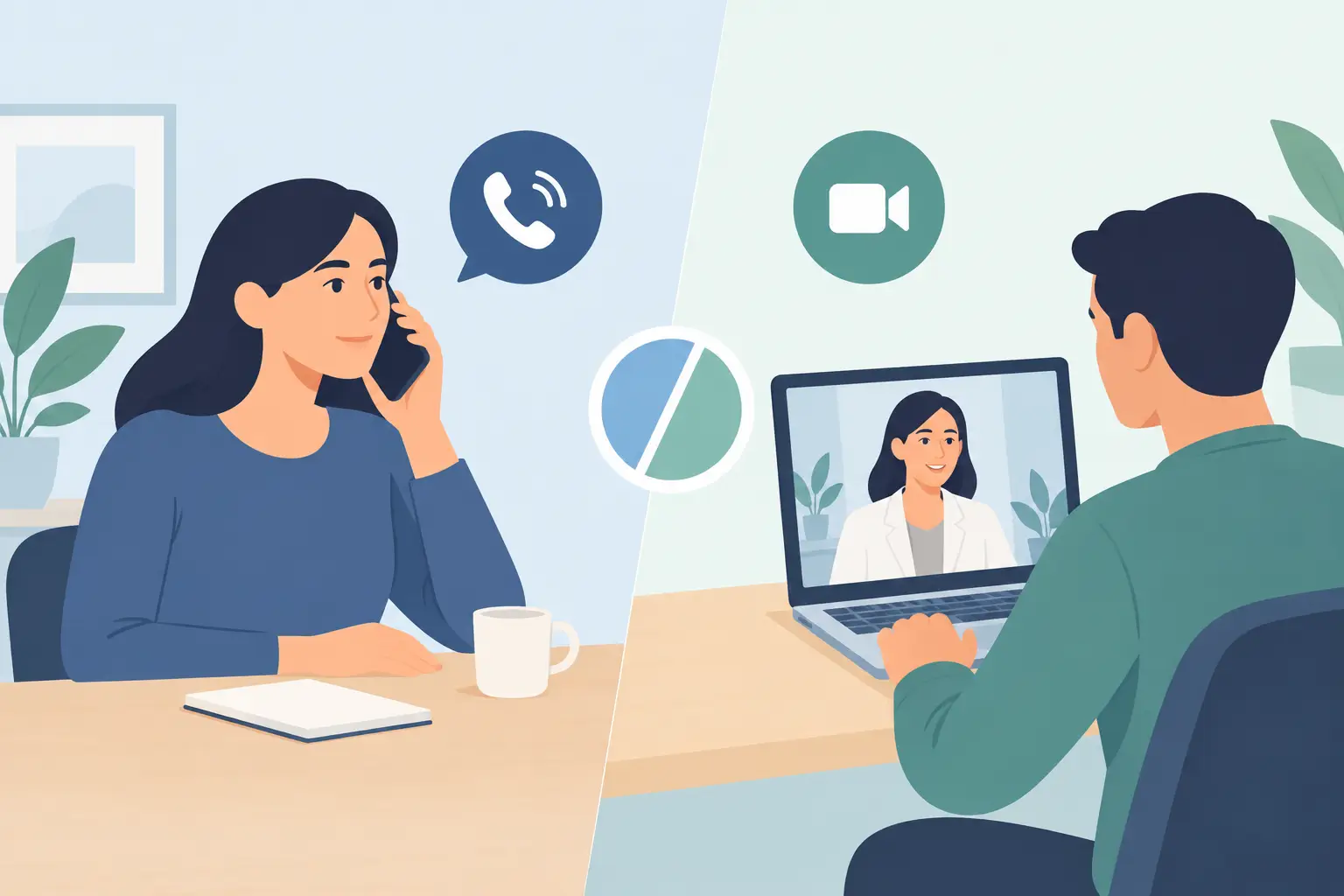
You wake up with a painful UTI, a child with a fresh fever, or a script that has somehow run out on the worst possible day. That is usually when the question lands: telehealth vs in person GP – which one actually makes sense right now? For many everyday health issues, the answer is less about which option is better overall and more about which one is better for this problem, on this day, with your time and needs in mind.
For Australian patients, both options have a clear place. A clinic visit can be the right call when a doctor needs to physically examine you, listen to your chest, check your ears, or assess something that cannot be judged properly over mobile or video. Telehealth, on the other hand, works well when the issue is straightforward, the next step is mostly advice or paperwork, or you need help quickly without travel, parking, reception queues, or sitting in a waiting room.
Telehealth vs in person GP: what really changes?
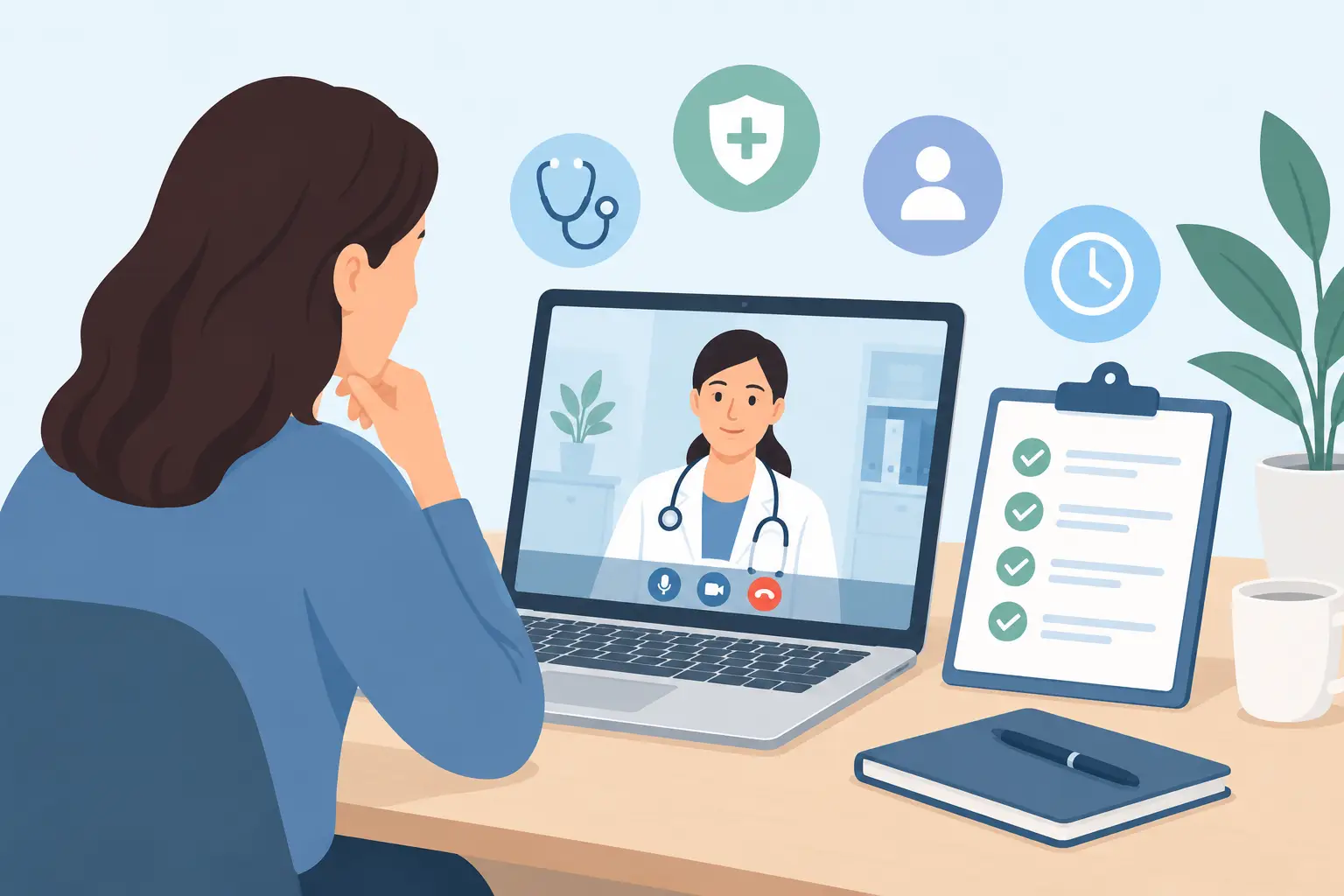
The biggest difference is access. Telehealth brings the consultation to your mobile or laptop, which means no commute, no time in a clinic, and no need to rearrange half your day for a standard GP appointment. If you are working, caring for kids, studying, travelling, or living outside a major city, that convenience is not a small perk. It can be the reason you get care promptly instead of putting it off.
The second difference is what the doctor can directly assess. In person, a GP can examine your abdomen, check a rash up close, test reflexes, take your blood pressure, or decide if something looks more serious after a physical review. Telehealth relies on your history, visible symptoms on video if relevant, and the doctor’s clinical judgement about whether remote care is appropriate.
That is why telehealth is often best for common, non-emergency concerns where the likely outcome is advice, a prescription, a referral, a medical certificate, or a pathology request. In person care is often better when diagnosis depends on touch, testing, or a closer physical assessment.
When telehealth is often the smarter choice
Telehealth suits problems that are common, familiar, and reasonably easy to assess through conversation and symptom history. If you need a repeat script, treatment advice for a likely sinus infection, support for asthma symptoms you already know well, or a referral to a specialist, a mobile or video consultation can be a very efficient way to get sorted.
It is also a strong option when privacy matters. Some patients are more comfortable discussing men’s health, women’s health, weight management concerns, or sensitive symptoms from home rather than across a busy reception desk and packed waiting room. That extra sense of privacy can make it easier to speak openly and get the help you need.
Speed is another factor. If your issue is time-sensitive but not an emergency, telehealth can remove the usual delays that come with clinic logistics. You can book, speak to an Australian-registered GP, and receive practical next steps such as an eScript or certificate by SMS or email, often on the same day. For routine care, that is hard to beat.
When an in person GP visit is the better option
Some problems simply need hands-on medicine. Chest pain, severe shortness of breath, heavy bleeding, signs of stroke, collapse, or a serious injury are not telehealth matters at all – they need urgent care. Even for non-emergency issues, there are times when a clinic visit is more useful.
If you have abdominal pain that is worsening, a lump that needs examination, an ear problem where the doctor may need to look inside, or a skin issue that is difficult to judge on camera, in person care usually gives a clearer answer. The same applies if you need a procedure, vaccination, wound care, or immediate testing done on site.
There is also the simple reality that some symptoms sound routine until a doctor starts asking questions. A sore throat might be straightforward, or it might need a physical examination. A cough might be viral, or it might need chest auscultation. Good GP care includes knowing when remote care is enough and when to redirect you to a clinic or urgent service.
The trade-off most patients actually care about
Most people are not comparing medical models in theory. They are asking two practical questions: can this be safely managed without going in, and will I get what I need today?
That is where telehealth shines for everyday primary care. If the likely outcome is a treatment plan, repeat prescription, medical certificate, specialist referral, or request for further testing, remote care can save a significant amount of time. If the likely outcome is an examination, procedure, or immediate physical assessment, a clinic visit is usually the better first move.
Telehealth vs in person GP for common situations
For repeat prescriptions, telehealth is often ideal. If your medication and condition are already established, a remote GP appointment can be a quick, low-friction way to manage continuity.
For medical certificates, telehealth also makes sense in many cases. If you are unwell and need documentation for work or study, staying home is often more practical than dragging yourself to a clinic.
For referrals and pathology requests, telehealth can be very efficient as well. If your symptoms suggest the next step is specialist review or testing, you may not need a waiting room just to start the process.
For infections such as UTIs, sinus symptoms, or other straightforward presentations, telehealth can work well when your symptoms fit a common pattern and there are no red flags. The GP can assess whether treatment is appropriate or whether you need to be seen in person.
For anything involving severe pain, uncertain diagnosis, or a symptom that really needs examination, in person care remains important. Telehealth is convenient, but convenience should never replace proper assessment when proper assessment is needed.
What to consider before you book
A good rule is to think about what the doctor will need to do, not just what you want to ask. If the consultation is mostly about talking through symptoms, confirming a history, reviewing treatment, arranging documents, or deciding on next steps, telehealth is often a strong fit.
If you suspect the doctor will need to physically inspect, listen, touch, test, or treat something on the spot, book in person. That can save you from having two appointments instead of one.
It also helps to think about your own circumstances. For a parent at home with a sick child, a worker with a tight schedule, or someone in a regional area, telehealth can remove enough friction that care happens sooner. That speed matters. Delayed routine care has a habit of becoming more complicated than it needed to be.
Why first-time telehealth users are often surprised
Many people assume telehealth is only useful for very basic questions. In practice, it is often more capable than expected for routine GP care. A well-run service can handle consultations, advice, eScripts, referrals, certificates, and requests for tests in one straightforward process, without asking you to download an app or sit around waiting for a call that never comes.
That said, a reliable telehealth service should also be clear about limits. If a remote consultation is not appropriate, you should be told that directly. That is part of safe care, not a shortcoming.
The right choice is often the fastest safe one
If you are weighing telehealth vs in person GP, the best option is usually the one that gets you appropriate care quickly and without unnecessary hassle. Sometimes that means seeing a doctor from your couch and having your script sent to your mobile within minutes. Sometimes it means getting in front of a GP who can examine you properly.
Neither option replaces the other. They work best as two parts of the same system: telehealth for accessible, efficient care when a remote consult is suitable, and in person care when a hands-on assessment is needed. For everyday, non-emergency health concerns, that flexibility is a genuine advantage.
If your issue is routine, time-sensitive, and suitable for remote care, a service like TeleDoc can make the process simple: book online, speak with an Australian-registered GP, and receive the practical outcomes you need without spending your day in a waiting room. And if your symptoms need more than telehealth can safely offer, the right next step is to be seen in person without delay.
The best healthcare option is not the one that sounds most modern or most traditional. It is the one that fits your symptoms, respects your time, and gets you the right care when you need it.