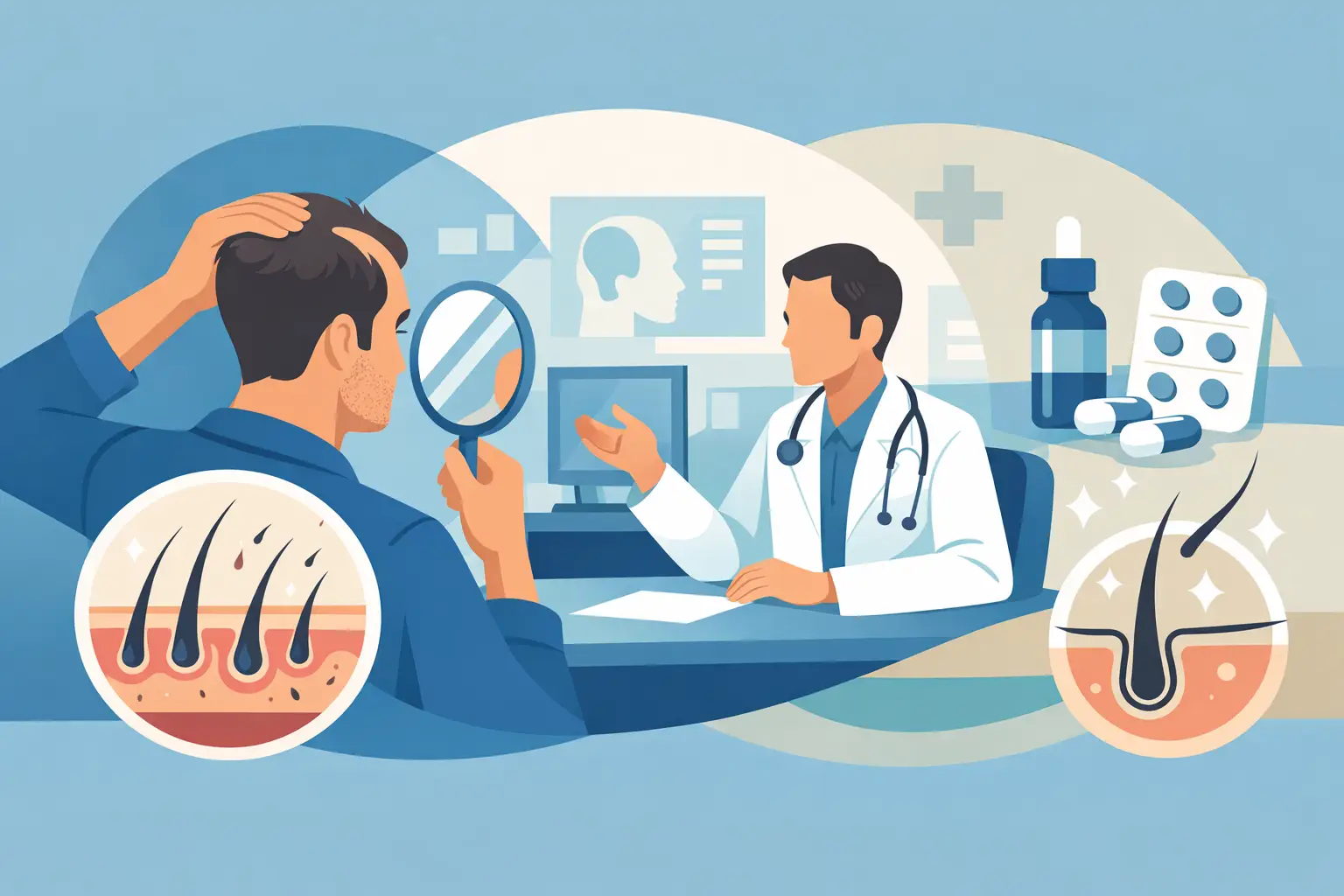
Finding more hair in the shower drain, on your pillow or in your brush can be unsettling. Hair loss is common, but the pattern, speed and symptoms around it matter. A gradual change over years may have a different cause and treatment pathway from sudden shedding over a few weeks.
A GP can help you make sense of the change without guesswork. They can ask the right questions, review your health and medicines, arrange tests where appropriate, and discuss whether treatment, monitoring or an in-person examination is the sensible next step.
What is normal hair shedding?
Hair grows in cycles. At any point, some hairs are growing, some are resting and some are naturally shedding. Losing around 50 to 100 hairs a day is often considered within the usual range, although most people do not count individual strands.
Normal shedding becomes more noticeable when it is accompanied by a wider part line, a receding hairline, thinner ponytail, bald patches or clearly reduced density across the scalp. It is also worth getting advice if hair loss is causing distress. Your concern is reason enough to speak with a doctor.
Common causes of hair loss
There is no single explanation for all thinning or shedding. Family history is a frequent factor. Pattern hair loss, also called androgenetic alopecia, can affect men and women. In men it often starts with recession at the temples or thinning at the crown. In women it can present as more diffuse thinning, particularly around the part line, while the frontal hairline is often maintained.
Another common cause is telogen effluvium. This is increased shedding that may occur a few months after a physical or emotional stressor. Illness with fever, surgery, rapid weight loss, significant stress, childbirth and restrictive eating can all disrupt the hair cycle. It can look dramatic, yet the shedding may settle once the trigger has passed. Recovery still takes time because hair growth is slow.
Nutritional issues can also contribute. Low iron stores, inadequate protein intake and deficiencies in certain vitamins or minerals may be relevant for some people, particularly where diet has changed, periods are heavy, or there are digestive conditions affecting absorption. Taking high-dose supplements without advice is not always helpful and can occasionally create new health problems.
Thyroid conditions, hormonal changes and some medicines may contribute to diffuse thinning. Tight hairstyles, frequent bleaching, chemical treatments and heat damage can cause breakage, which is different from hair falling out at the root but can produce a similar appearance of reduced volume.
Patchy hair loss has its own set of possibilities. Alopecia areata, an autoimmune condition, can cause smooth round patches. Fungal scalp infections and inflammatory scalp conditions can also affect hair growth. These causes may need a close scalp examination and, at times, prompt treatment to reduce ongoing damage.
The clues a GP will look for
A useful consultation starts with the timeline. Did the shedding begin suddenly or gradually? Is it all over, around the part line, at the temples or in distinct patches? Have you recently been unwell, had a baby, changed your diet, started or stopped a medicine, or experienced major stress?
Your GP may also ask about scalp itch, pain, redness, scaling or pustules, as well as fatigue, weight change, changes to menstrual periods and family history. These details help separate a likely temporary shedding episode from a pattern that needs a different approach.
Depending on your symptoms and history, a GP may recommend blood tests. Testing is targeted rather than automatic. For example, iron studies, thyroid function or other tests may be appropriate where your symptoms suggest a possible underlying issue. Sometimes the best next step is an in-person scalp assessment or referral to a dermatologist, especially for scarring, inflammation, uncertain diagnosis or sudden patchy loss.
Treatments depend on the cause
The most effective treatment for hair loss depends on why it is happening. Correcting an underlying health issue, adjusting a medicine under medical supervision, managing a scalp condition or improving nutritional intake may be the priority. If shedding followed a temporary event, reassurance and a plan to monitor regrowth can be appropriate.
For hereditary pattern hair loss, early treatment often offers the best chance of preserving existing hair. Some topical and oral medicines may be considered by a GP for suitable patients. They are not right for everyone and may have side effects, contraindications or pregnancy-related considerations. A doctor can explain what is realistic for your situation, how long treatment may take to show results, and what happens if it is stopped.
Be cautious with products that promise rapid regrowth or guaranteed results. Hair treatments commonly need consistent use for several months before any benefit can be assessed. Photos taken in the same light and position every one to three months can give a more reliable picture than checking the mirror each day.
Cosmetic measures can also make a meaningful difference while you investigate the cause or wait for treatment to work. A gentler hair-care routine, reduced heat styling, a less tight hairstyle and a haircut that supports volume may help with appearance and reduce breakage. These steps cannot reverse every form of hair loss, but they can protect fragile hair.
When you should seek medical advice sooner
Book a GP appointment promptly if hair loss is sudden, patchy or rapidly worsening. The same applies if your scalp is painful, very itchy, red, scaly, swollen or oozing. These signs can point to an infection or inflammatory condition that needs assessment rather than a cosmetic solution.
It is also sensible to seek advice if shedding occurs alongside fatigue, unexplained weight change, palpitations, ongoing digestive symptoms, very heavy periods or a significant change in mood. Hair changes can sometimes be one visible sign of a broader health issue.
If you are pregnant, breastfeeding, trying to conceive, or managing a chronic condition, check with a doctor before starting any medicine or supplement marketed for hair growth. “Natural” does not automatically mean safe or suitable.
Preparing for a telehealth consultation
A telehealth appointment can be a convenient first step for gradual thinning, increased shedding, repeat treatment discussions or questions about whether tests are needed. Good lighting and a few clear photos of the affected area can help a GP understand the pattern, although some scalp concerns will still require an in-person review.
Before your appointment, note when the change began, any recent illness or stressors, current medicines and supplements, your family history, and any scalp symptoms. If you have previous blood test results, keep those details available. This can make the consultation more focused and help your GP decide on the right next action.
With TeleDoc, you can speak privately with an Australian-registered GP by phone or video without a waiting room visit. Where clinically appropriate, the doctor may discuss treatment options, provide a pathology request, or advise whether you should be examined in person. Prescriptions and referrals are always based on the GP’s clinical assessment.
Give your hair and health time
Hair growth is slow, so it is understandable to want a quick fix. In practice, the right approach is usually a clear diagnosis, realistic expectations and steady follow-through. Avoid changing several products and supplements at once, as it becomes harder to tell what is helping or causing side effects.
If your hair loss is new, progressing or worrying you, a GP conversation can replace uncertainty with a practical plan. Early assessment is particularly worthwhile when there are patches, scalp symptoms or changes in your general health.